How You Can Dry Flowers/ Wax Fresh Flowers
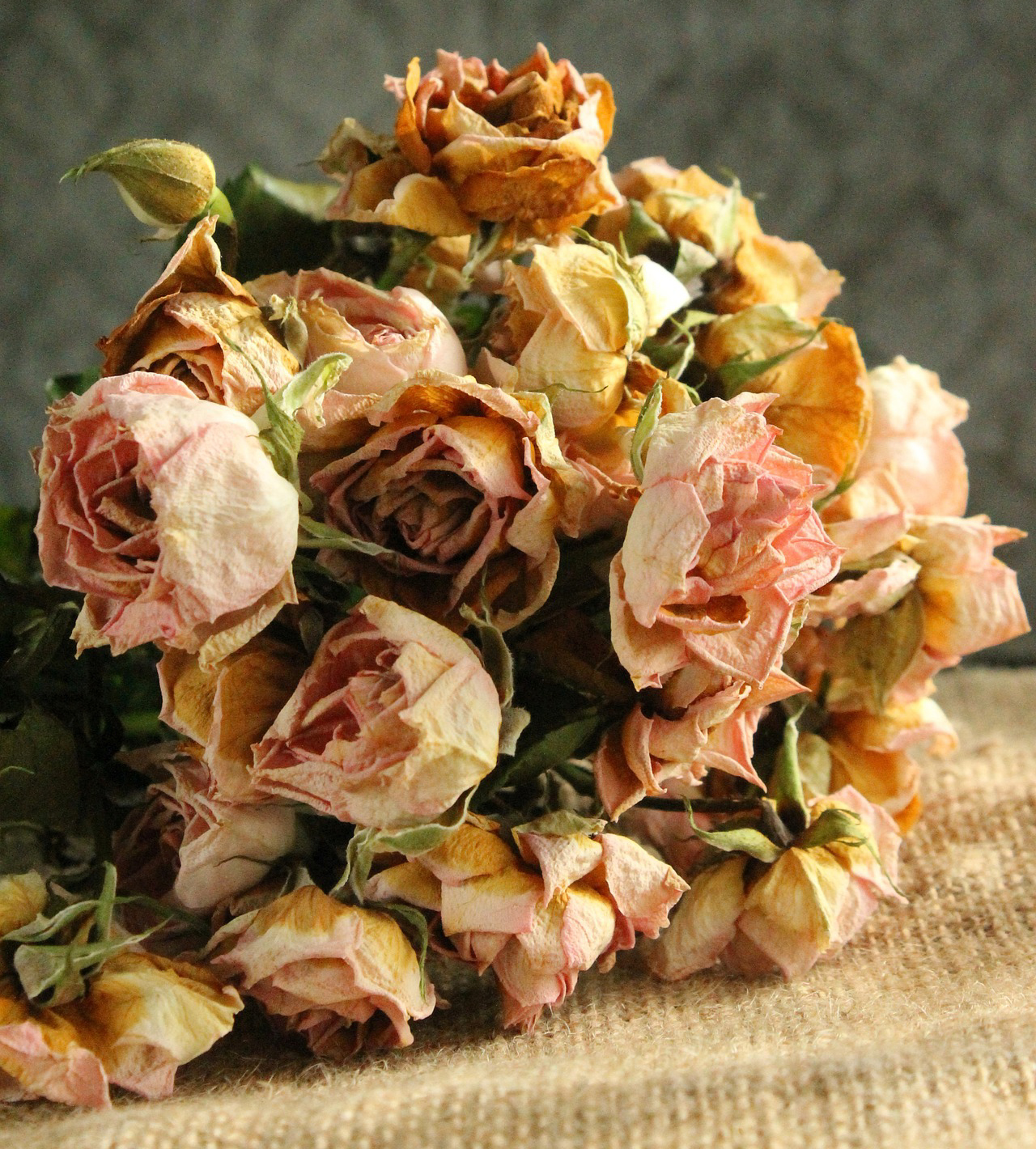
You can enjoy the freshness of a flower garden throughout the year by cutting and drying your favorite flowers. The two easiest and least expensive methods are sand-drying and air-drying.
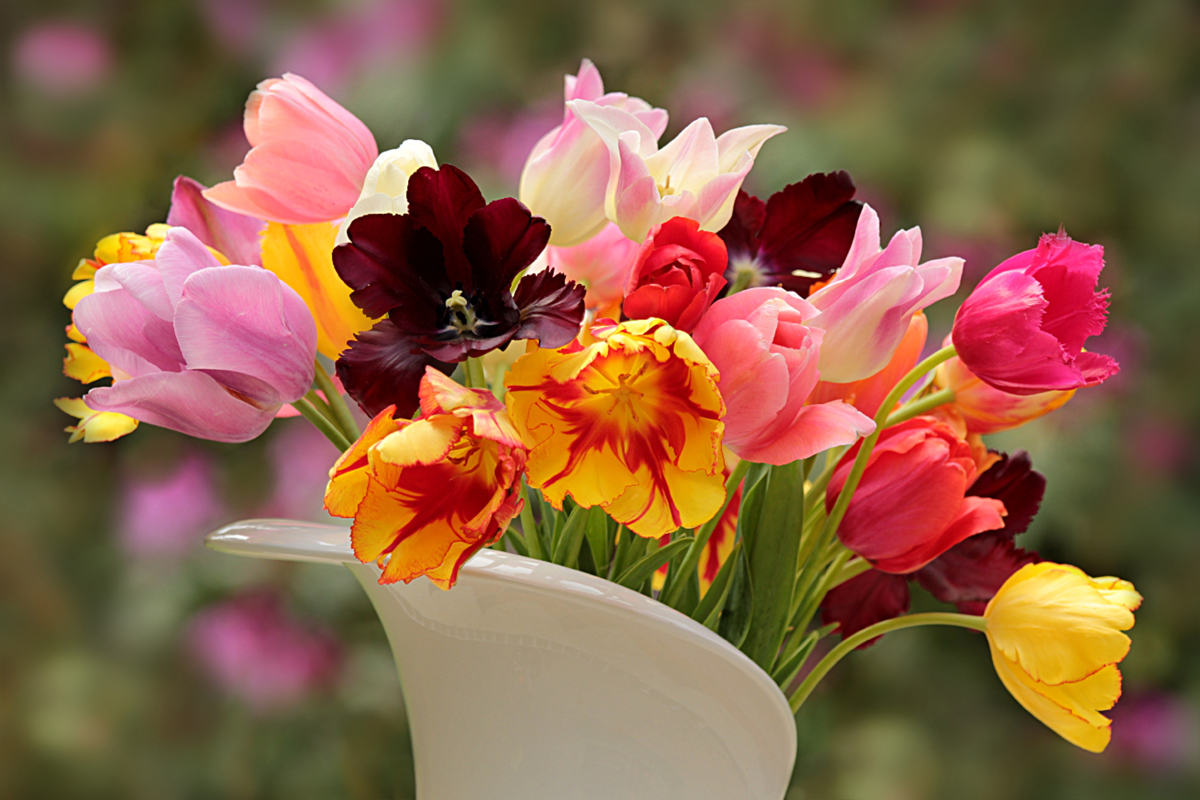
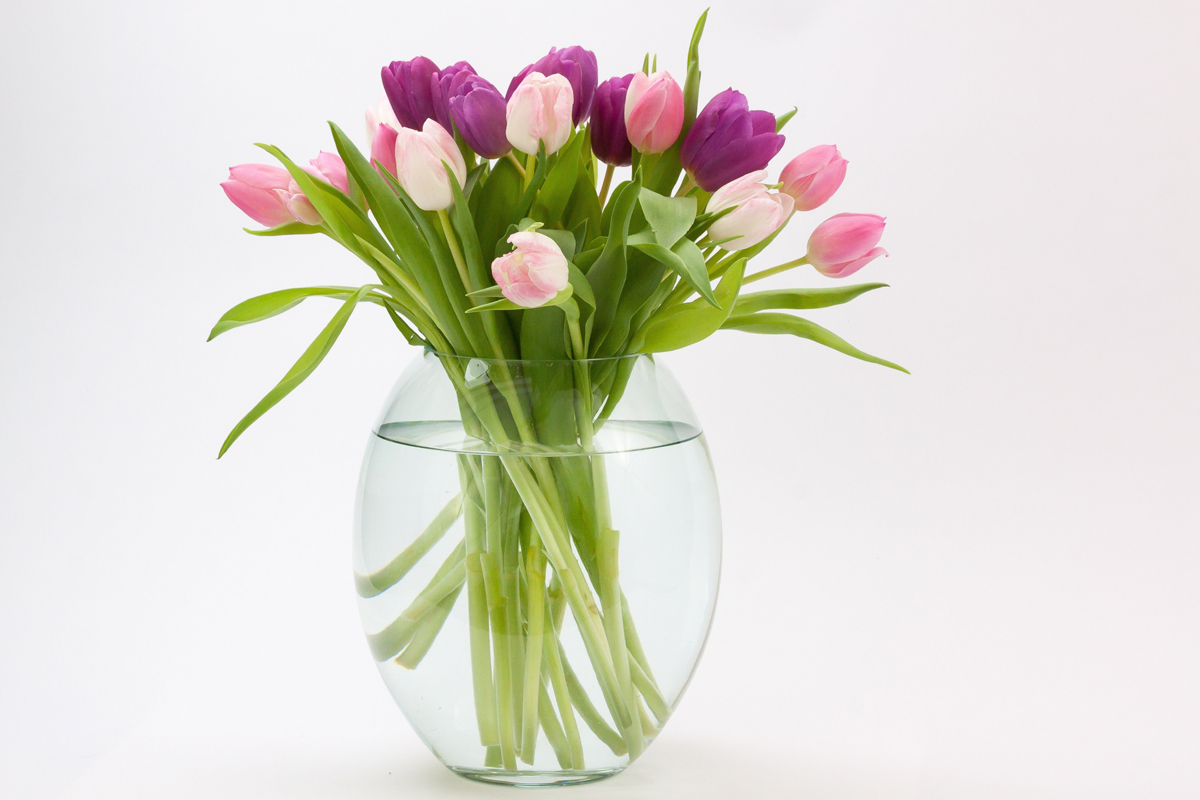
Sand-drying can be used to dry a wide variety of flowers, such as roses, tulips, dahlias, marigolds and snapdragons. Flowers which last only one day, like day lilies, do not dry well. Do not dry asters, azaleas, chrysanthemums, geraniums, petunias, phlox, pinks, poppies or violets. But feel free to do your own experimentation.
To prepare for sand-drying, cut the flowers at the peak of their show as any imperfections will be exaggerated by drying. Pick the flowers after the dew has fully evaporated. Make sure the stems are dry.
Prepare the flowers by reinforcing the stems and blossoms with florist’s wire or with white glue. For daisy-type flowers and flowering shrubs, push a 6″ piece of wire through the stem and right through the flower head; bend the end of the wire into a hook over the flower head and then pull it down, thus securing the head to the stem.
For flowers such as roses and tulips which are dried face-up, cut off most of the stem except an inch or so and insert the wire as above.
For many-petaled flowers, use glue instead of wire. Diluting the white glue with a drip of water and using a toothpick, dab a thin coat of glue at the base of each petal, working the glue into the base of each flower to attach each petal to the base. Dry completely.
To dry the flowers, slowly cover them with white sand in deep, open boxes. Cup-shaped or rose-shaped flowers should be dried face-up. Make the sand deep enough to hold the flowers in an upright position, position the flower carefully and slowly pour the sand around the base of the flower, then around the sides and under and over the petals. Pour the sand evenly and slowly in order to preserve the natural shape of the blossom.
Daisy-type flowers should be dried face down. Make an even base of sand in the box and make a little dip in the sand the same shape as the flower.
Hold the flower steady and carefully build up the sand around the blossom until it is fully covered.
Snapdragons, lilac, elongated flowers and flowering branches should be positioned horizontally in the sand, flowering branches face up. Carefully pour the sand around and between the flowers and into individual blooms. A soft artists’ brush will help you in lifting the blossoms slightly as you pour the sand so that they won’t be flattened by its weight.
When all the flowers are completely covered with sand put the drying box in your drying area and leave undisturbed for one to three weeks. Rapid drying in a very warm, dry and brightly-lit place will produce bright blossoms; slower drying in a more humid spot will produce more muted colors.
Removing the sand should be done very carefully, tipping the container slightly, allowing the sand to flow slowly from one corner of the box. As each flower is released from the sand, lift it gently out.
If you wish to store your dried flowers for later use, seal them in airtight containers such as tins or plastic boxes sealed with masking tape, or in sealed cardboard boxes enclosed in airtight plastic bags.
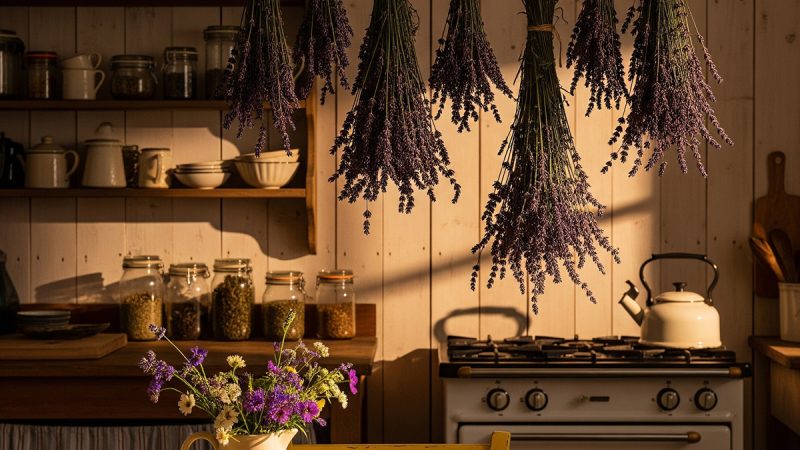
Air-drying can be very successful with herbs, everlastings and ornamental grasses. Choose perfect plants with long stems, removing the lower leaves. Put the flowers in small bunches, fastening them together with an elastic band; then open each bunch into a fan shape. Hang the flowers head down from nails in a dry, dark place for one to three weeks until they are completely dry. The colors will usually be muted. Display your flowers in the house or store them as above.
You may want to experiment with waxing fresh flowers. This too is simple; just melt some paraffin wax and plunge each individual flower into the wax. Remove and shake the excess wax off each flower. Put it into the refrigerator to set and harden.
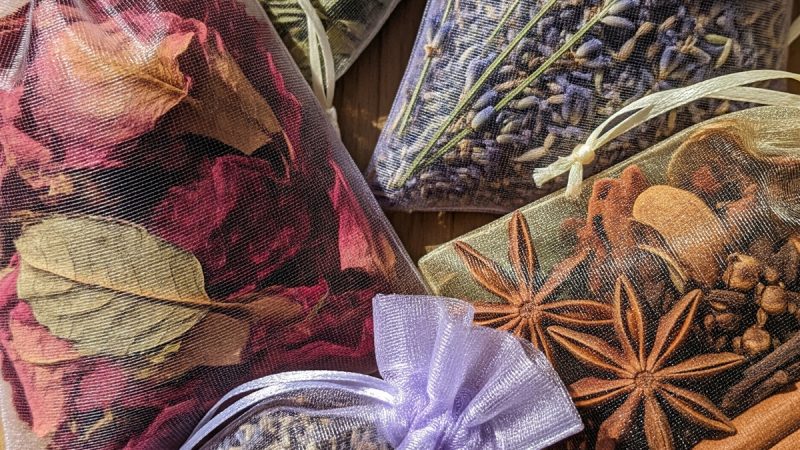
Having dried, preserved flowers in your home year-round can really brighten it up. You may want to give dried flower arrangements as Christmas gifts. It is a wonderful, satisfying hobby to preserve your own flowers. You can also make lovely cards by pressing your flowers and covering them with clear mac-tac on a piece of construction paper. It’s easy to do and looks lovely.
Photo. Razvandm