
What is Glycerin?
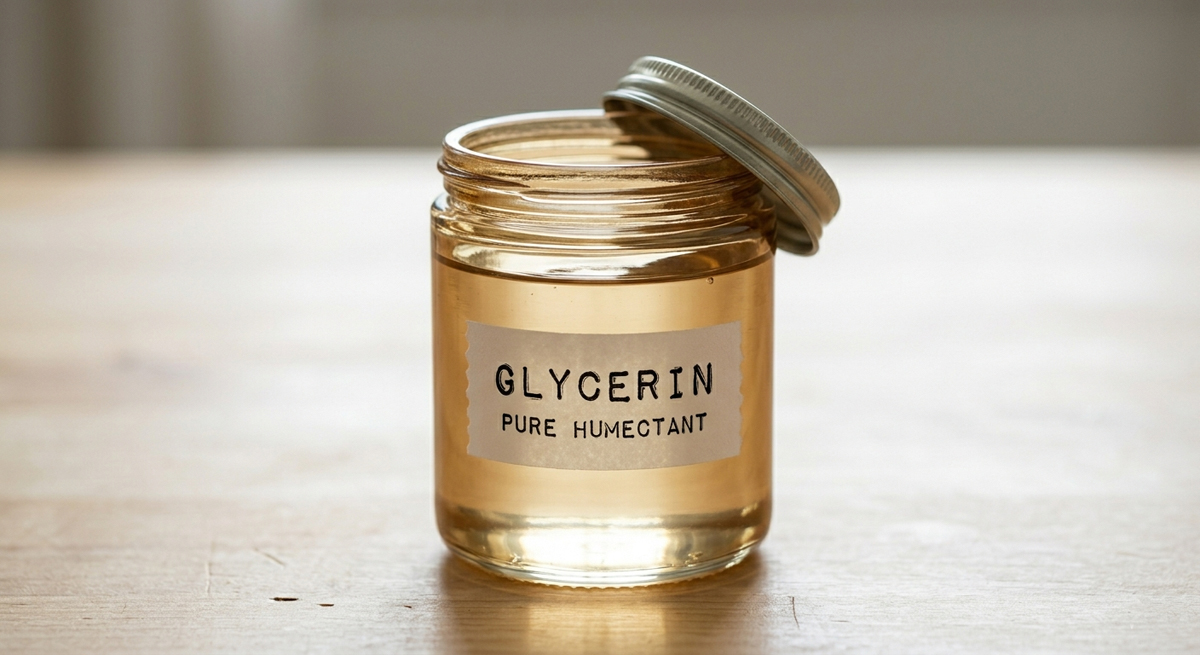
Cold Process Soap-makers have it down to a litany. When asked why their soap is better than store-bought, they say (among other things), “Because of the natural glycerin. Glycerin is a humectant, meaning it attracts moisture to your skin. Glycerin is a natural by-product of the soap-making process and while commercial manufacturers remove the glycerin for use in their more profitable lotions and creams, handcrafted soap retains glycerin in each and every bar.”
Melt and Pour Soap makers have a similar line, “Commercial soaps remove the glycerin for use in more profit producing lotions and creams”, my soap has extra glycerin added to it. This helps make it clear, and also makes it a lot more moisturizing.
But What is Glycerin, Really?
Glycerin is a neutral, sweet-tasting, colorless, thick liquid which freezes to a gummy paste and which has a high boiling point. Glycerin can be dissolved into water or alcohol, but not oils. On the other hand, many things will dissolve into glycerin easier than they do into water or alcohol. So it is a good solvent.
Glycerin is also highly “hygroscopic” which means that it absorbs water from the air. Example: if you left a bottle of pure glycerin exposed to air in your kitchen, it would take moisture from the air and eventually, it would become 80 per glycerin and 20 percent water.
Because of this hygroscopic quality, pure, 100 percent glycerin placed on the tongue may raise a blister, since it is dehydrating. Diluted with water, however, it will soften your skin. (Note: While people say this softening is the result of the glycerin attracting moisture to your skin, there is heated debate as to whether or not the glycerin has some other properties all its own which are helpful to the skin. Summed up, the current thinking is “We know glycerin softens the skin. Some people think its because it attracts moisture, but there could be other reasons.”)
Where Does Glycerin Come From?
Up until 1889, people didn’t know how to recover glycerine from the soap-making process, so commercially produced glycerin mostly came from the candle-making industry (remember, back then candles were made from animal fats).
In 1889, a viable way to separate the glycerin out of the soap was finally implemented. Since the number one use of glycerin was to make nitroglycerin, which was used to make dynamite, making soap suddenly became a lot more profitable! I have an untested theory that you could trace the roots of most big soap-makers (and the “fall” of the small, local soap-maker) to about this time in history.
The process of removing the glycerin from the soap is fairly complicated (and of course, there are a lot of variations on the theme). In the most simplest terms: you make soap out of fats and lye. The fats already contain glycerin as part of their chemical makeup (both animal and vegetable fats contain from 7% – 13% glycerine). When the fats and lye interact, soap is formed, and the glycerin is left out as a “byproduct”. But, while it’s chemically separate, it’s still blended into the soap mix.
While a cold process soap-maker would simply pour into the molds at this stage, a commercial soap-maker will add salt. The salt causes the soap to curdle and float to the top. After skimming off the soap, they are left with glycerin (and lots of “impurities” like partially dissolved soap, extra salt, etc.). They then separate the glycerin out by distilling it. Finally, they de-colorize the glycerin by filtering it through charcoal, or by using some other bleaching method.
Glycerin has lots of uses besides being used to make nitroglycerin (note: glycerin is not an explosive substance by itself. It has to be turned into nitroglycerin before it becomes explosive, so it’s safe to work with in your kitchen). Some uses for glycerin include: conserving preserved fruit, as a base for lotions, to prevent freezing in hydraulic jacks, to lubricate molds, in some printing inks, in cake and candy making, and (because it has an antiseptic quality) sometimes to preserve scientific specimens in jars in your high school biology lab.
Glycerin is also used to make clear soaps. Highly glycerinated clear soaps contain about 15% – 20% pure glycerin. Known as “Melt and Pour” soaps, these soaps are very easy for the hobbyist to work with. They melt at about 160 degrees Fahrenheit, and solidify fairly rapidly. Because of their high glycerin content, the soaps are very moisturizing to the skin. Unfortunately, this high glycerin content also means that the soaps will dissolve more rapidly in water than soaps with less glycerin, and that if the bar of soap is left exposed to air, it will attract moisture and “glisten” with beads of ambient moisture.
These downsides, however are more than compensated by the emollient, skin loving and gentle nature of this soap which is especially good for tender skin and children.
(1) The pure chemical product is called Glycerol (which shows that it is an alcohol), while the impure commercial product is called Glycerin. This is a technical complexity, so for this article, I’m sticking to the more familiar term, Glycerin.
The Author:
Kaila Westerman is the creator of Miller’s Homemade Soap Page, a foundational resource for the handcrafted soap community since 1997. An expert in recipe design and traditional saponification, her technical guides and charts have served as the blueprint for generations of modern soap-makers.
© Copyright, 1997, Kaila Westerman
Reprinted with permission.
Let’s spread the love! Tag a friend who would appreciate this post as much as you did.


From where can I get the cheapest rates or glycerine?
If you are looking for glycerin.. you can purchase it at amazon.. Buy Glycerin
Thank you! That was very informative.
“What Is Glycerin? | Glycerol” was in fact a truly great blog,
. Keep composing and I will continue to keep reading through!
I appreciate it -Trista
this is really good it will definitely help me with my science project
🙂
What is lye, where can it be bought so we can make our own glycerin?
Great article
I’ve got skin issues and have been using awesome products without petro-chemicals. Now I find they contain palm oil derivatives, so I’ve been thinking I mite have to make my own! Starting to feel without hope, then I came across this easy to understand article. It may all be a bit beyond my capabilities, but, I have a resource~point of reference here, so I am no longer without hope entirely. Thanks!
if you want to make lye at home, you take wood ash (preferably pecan, apple, peach or cherry woods- burn them to ash) place in a container with small hole in bottom. place this container into a larger container and moisten the ash (you don’t want to bath the ash, just get it wet enough so that the water will filter down through the ash and drip out the bottom) it can take a while for the water to filter through all the ash, the liquid that comes out the bottom is lye.
make sure to use filtered or distilled water and make sure to use lye safe containers.
the resulting lye will have to be contentrated and is also a brownish color. there are ways to ‘clean’ the lye but i don’t know of any.
or you can by lye at the hardware stores normally marked for drain cleaning. some still carry it but many no longer do as meth makers tend to uses it to make drugs as well (this is what i was told as to why lye is no longer sold in some stores such as lowes or home depot and such.)
Thank you for your kind words! Lye, also known as sodium hydroxide or caustic soda, is a crucial ingredient in making soap and glycerin. It is a highly alkaline substance that can be dangerous if not handled properly. While it can be purchased at some hardware stores, it is recommended to purchase food-grade lye from a reputable supplier such as a soap-making store or online retailer.
If you are interested in making your own glycerin, there are many resources available online with step-by-step instructions and recipes. It’s important to note that making soap and glycerin at home requires precision and caution, so be sure to follow all safety guidelines and measurements carefully. Good luck, and I hope you find success in your DIY skincare journey!
I have heard Glyerine is great for making bubbles,why? And can you buy it on the high street?
Glycerine makes the soap and water wetter so it will spreed out better.
Yes, glycerine is great for making bubbles because it helps to slow down the evaporation of water, which makes the bubbles last longer. It also adds some viscosity to the bubble mixture, which helps to create stronger and more resilient bubbles.
As for purchasing glycerine on the high street, it depends on where you live and what stores are in your area. Glycerine can often be found in drugstores or health food stores, and some larger grocery stores may carry it as well. You can also purchase it online from various retailers.
I recently bought a gluten-free cookbook and some of the recipes call for glycerin. Is there a difference between the soap glycerin and that used for cooking? Where would I buy cooking glycerin? What does it do in the baking process and is there something else that could be used instead?
Glycerine attracts moisture so using it in your baking makes the food stay softer and moist for a longer time. It is used in icing to stop it from getting rock hard and to stick fondant together. You can get a 6oz bottle of vegetable glycerine from a Walmart pharmacy or a whole foods of heath food store. It is also used in cough and cold remedies both home made and commercial.
Great question! Yes, there is a difference between the glycerin used in soap-making and the one used in cooking. Glycerin used in cooking is food-grade and safe for consumption. You can find cooking glycerin in most health food stores or online.
In baking, glycerin acts as a moisturizer and humectant, helping to keep baked goods moist and prevent them from drying out. It also helps to improve texture and create a smooth and glossy finish on cakes and pastries.
If you are unable to find glycerin or prefer not to use it, there are several substitutes you could try. Some options include honey, agave nectar, corn syrup, or even adding a bit of extra oil or butter to the recipe. However, keep in mind that each substitute may affect the final texture and flavor of the baked goods differently. It’s always a good idea to experiment with small batches before making a large recipe.
i’ve had an attempt to make biodiesel. been told the liquid at the base is glycerin but is very dark due to using waste veg oil. can this be used or do i throw it away ??
Yes most certainly can put the glycerin to use.
http://www.ehow.com/way_5907584_do-glycerine-biodiesel_.html
you might be able to clean it by putting it through a charcoal filter.
I bought some small peppermint patties and after eating two of them,I began violently ill in the night vomiting which tasted and foamed like glycerin or soap! What I vomited was foammy and seem to take the skin right off my throat…I could hardly swallow and my throat was full of saliva! I tried to cough but was unable to do so! After taking pepto bismal and breathing moist air thur a wet washrag it finally begin to feel better! Do they put glycerin in candy and why?
Can i make solid soap out of liquid glycerin?
use news paper and equal amount of water and glycerin mixed in a bowl or cup mix till you see the glycerin has dissolved put in spray bottle and mist news paper wipe with news paper the lens will feel wet for a few minutes
no the glycerine is a product from soap making you can use in in lotions and in liquid soap
I purchased some Glycerin as part of a base for E-cigarette solution. 40/60 vegetable Glycerin/Propylene Glycol. Is there a difference between pure Glycerin and Vegetable Glycerin? I was thinking it was the same thing.
They both have the same properties and work in the same way except the old fashioned glycerin is made from animal fat..Yuck! Vegetable glycerin is the way to go 🙂
thanks, It was very helpful
Glycerin is a useful product.approximately it is used in each and every thing.i am thanks full for that persons who discovered glycerin
Can i use glycerin good for oil pimples around the eyse
no use triple antibiotic cream you can get it at Wal-mart. use a cotton swab and baby shampoo in the shower.Do not put the triple antibiotic cream in your eye, just a tiny dot of cream on a clean dry cotton swab one for the area of each eye.
i used oasis tears that has only 0.2% glycerin and my face started to go numb and i started itching. has anyone else had this reaction to glycerin?
you must be the one in a million person that can have a bad reaction to glycerine. Equate Revive Plus has no glycerine in it comes in sensitive and they are single use eye drops. There is enough eye drops for 2 eyes or more. I keep mine in a little cardboard jewelry box in my purse. I had sunburns my eyes. I was a mascot for a Wendy’s Restaurant opening dressed as Wendy and the sun was very strong and I had to do it for 2 days I went to my Dr. and he told me to use these I still use them because of the damage to my eyes I now have very discolored whites of the eye and chronic dry eye.
Kind of helpful but I was hoping to find more information about vaporizing nicotine.
you can make vaper with it look for more vids for making your own vaper liquid I make mine without nicotine just glycerine water and flavor from craft department at walmart, hobby lobby or michaels.
I want to clean a photo type lens without leaving smears, smudges, lint, etc. I have found a wet wipe which cleans with “the power of electrolyzed” water. They contain electrolysis water, bioethanol, grapefruit seed extract and glycerin. Will this harm the lens in any way or leave it oily?
use news paper and equal amount of water and glycerin mixed in a bowl or cup mix till you see the glycerin has dissolved put in spray bottle and mist news paper wipe with news paper the lens will feel wet for a few minutes
What kind of soup that common use?
I live in Ottawa. Anyone know where someone looks to buy Glycerol.
My Dad, used it all the time when ice fishing. Once the hole is made in the ice, 1 tablespoon of glycerol, the hole never freezes over again for a few hours.
I ice fish all the time and cannot find any anywhere, or even know where to look, any ideas.
They might have some in specialized baking store Since it’s use to restore consistency of dry gel icing colours. That is where i got mine and i had a hard time finding it.
You can find it in the candy making section of Bulk Barn near the melting chocolate, molds and flavored oils.
I found mine at CVS. It’s on the Isle with the beauty products.
Do you know how to make food grade vegetable glycerin from coconut oil? Every place I look mentions lye. I cannot find out how to do it anywhere
I have the same question & problem.
Can’t find any in food-grade Glycerine store to make edible extracts a home. Any input ?
How can we make sure if the Glycerin or Glycerol is plant sourced and not animal;
How about Glycerin of Borax?
Hello , do I need glycerin or glycerol in order to mix water and pure Vitamin C powder for skin care , 50 year old skin…?
As you will inevitably learn on your path to losing weight, effective weight loss is not only about watching what you eat, but much more about changing your lifestyle. This means changing your habits and how you approach your day-to-day life. Read this information to help you throughout the process.
What % glycerine is perfect for skin from Raw Glycerine ?