
Making Natural Dyes from Plants
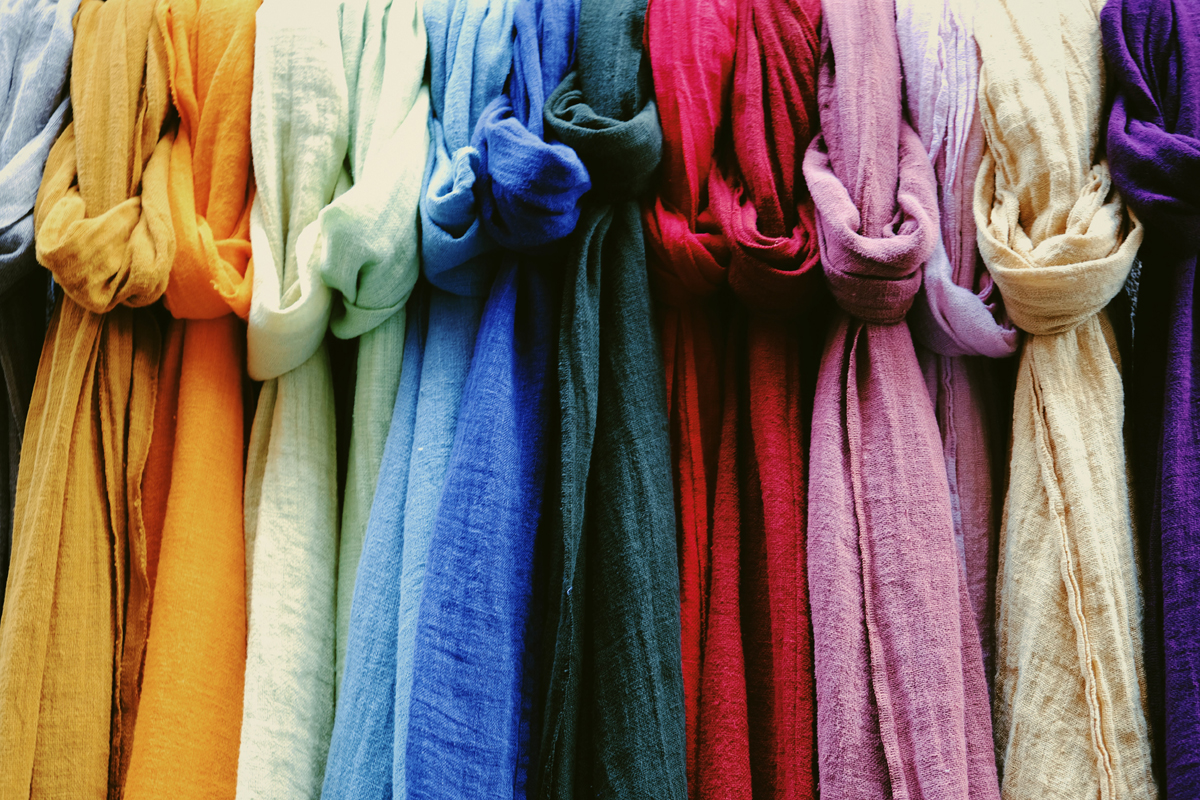
Natural dyes have been used for thousands of years to create colorful fabrics, yarns, and other textiles. These dyes are obtained from various sources such as plants, insects, and minerals. However, plant-based dyes are the most commonly used natural dyes because they are readily available, cost-effective, and produce a wide range of vibrant colors. Here are some of the best plants to use for natural dyes.
Gathering plant material for dyeing: Blossoms should be in full bloom, berries ripe and nuts mature. Remember, never gather more than 2/3 of a stand of anything in the wild when gathering plant stuff for dyeing.
To make the dye solution: Chop plant material into small pieces and place in a pot. Double the amount of water to plant material. Bring to a boil, then simmer for about an hour. Strain. Now you can add your fabric to be dyed. For a stronger shade, allow material to soak in the dye overnight.
Getting the fabric ready for the dye bath: You will have to soak the fabric in a color fixative before the dye process. This will make the color set in the fabric.
Color Fixatives (Mordant):
Salt Fixative (for berry dyes) 1/2 cup salt to 8 cups cold water
Plant Fixatives (for plant dyes) 4 parts cold water to 1 part vinegar
Other Mordants: Cream of tartar, iron, tin, alum or chrome
Alum – the most common mordant used with natural dyes. It can be used with almost all natural fibers and produces brighter and longer-lasting colors.
Iron – also known as ferrous sulfate, it is used to create deeper, richer colors and can be used on natural fibers such as wool, silk, and cotton.
Copper – another metal-based mordant that produces a green shade in the dye. It can be used on all types of natural fibers.
Tin – a metal-based mordant that produces brighter colors on natural fibers, particularly on silk and wool.
Tannin – a fixative that is derived from plants and is often used to prepare textiles for natural dyes. It helps to achieve darker colors and can be used on cotton, linen, and wool.
Cream of Tartar – a mild alkaline fixative that can be used with natural dyes to achieve brighter colors. It is particularly effective on cotton, silk, and wool.
Soda Ash – an alkaline fixative that can be used to modify the pH of the dye solution, resulting in brighter colors.
Soy Milk – a natural fixative that can be used to help the natural dye adhere to fabric, particularly on cotton and silk.
Rhubarb root – an alternative natural mordant that can be used on wool and silk to achieve a yellow color.
Logwood – a natural dye that also acts as a fixative for other natural dyes, particularly on cotton and linen.
Add fabric to the fixative and simmer for an hour. Rinse the material and squeeze out excess. Rinse in cool water until water runs clear.
Dye Bath
Place wet fabric in dye bath. Simmer together until desired color is obtained. The color of the fabric will be lighter when its dry. Also note that all dyed fabric should be laundered in cold water and separately.
Muslin, silk, cotton and wool work best for natural dyes and the lighter the fabric in color, the better. White or pastel colors work the best.
NOTE: It’s best to use an old large pot as your dye vessel. Wear rubber gloves to handle the fabric that has been dyed, the dye can stain your hands. It’s also important to note, some plant dyes may be toxic, check with the Poison Control Center if unsure.
A Listing of Plant Material Available for Dyes
Shades of ORANGE
– Alder (Alnus glutinosa or Alnus rubra) – (fresh or dried bark) – mordant: alum – orange/tan
All parts of the Alder tree are high in tannins. This makes it an incredibly reliable dye for cellulose fibers (cotton/linen) and protein fibers (wool/silk).
Freshly cut bark is creamy white, but it rapidly turns a deep orange when exposed to air. This oxidation is the key to the dye’s vibrant rusty tones.
Traditional Use: Alder was a staple in many heritage dyeing traditions because it doesn’t always require a mordant to achieve a lightfast tan, though alum brightens the orange tones significantly.
– Annatto/Achiote (Bixa orellana) (Seeds) – produces a bright orange-yellow color, mordant with alum and/or iron.
– Barberry (mahonia sp.) yellow orange (with alum) very strong & permanent. Any part of the plant will work.
– Blackeyed Susan (Rudbeckia hirta) – petals – produces a bright orange-yellow color, mordant with alum.
– Bloodroot (Sanguinaria canadensis) (Roots when cut open) – Orange to reddish orange – Used by Native American tribes for medicinal and dyeing purposes. – Mordant: alum and/or iron.
– Brazilian Peroba (Aspidosperma spp.) – wood – produces a bright orange color, mordant with alum.
– Butternut Tree (Juglans cinerea) – (bark, seed husks) – light yelllow-orange
– California Poppy (Eschscholzia californica) – whole plant – produces a soft orange-yellow color, no mordant needed.
– Carrot (Daucus carota) – (roots) – orange
– Chicory (Cichorium intybus)
– Cosmos – yellow, orange
– Dyer’s Broom (Genista tinctoria) – flowers – produces a bright yellow-orange color, mordant with alum.
– Eucalyptus – (all parts, leaves and bark) beautiful shades of tan, deep rust red, yellow, green, orange and chocolate brown. (best for silk or wool fibers)
– Giant Coreopsis (Coreopsis gigantea) Yields bright permanent orange with alum.
– Golden Marguerite (Anthemis tinctoria)(fresh or dried flowers) – mordant: chrome – golden orange
– Goldenrod (Solidago spp.) – flowers – produces a bright yellow-orange color, mordant with alum.
– Henna (Lawsonia inermis) (leaves) – produces a reddish-orange color, mordant with alum and/or iron.
– Lichen (orchella weed) (Roccellaceae) – gold, purple, red
– Lilac (Syringa vulgaris) (Twigs) – Yellow/orange
– Madder (Rubia tinctorum ) (roots are harvested, dried, and ground into a powder) Red, orange, and brown hues – Madder is a perennial flowering plant native to Europe and Asia. Madder has been used for dyeing textiles for over 5,000 years and was a hugely popular source of color for medieval Europe. It was even more valuable than gold in some cases. Mordant: Iron, tin (orange), or aluminum acetate (does well on wool and silk) Alum is the most commonly used mordant for madder root because it produces bright and long-lasting colors.
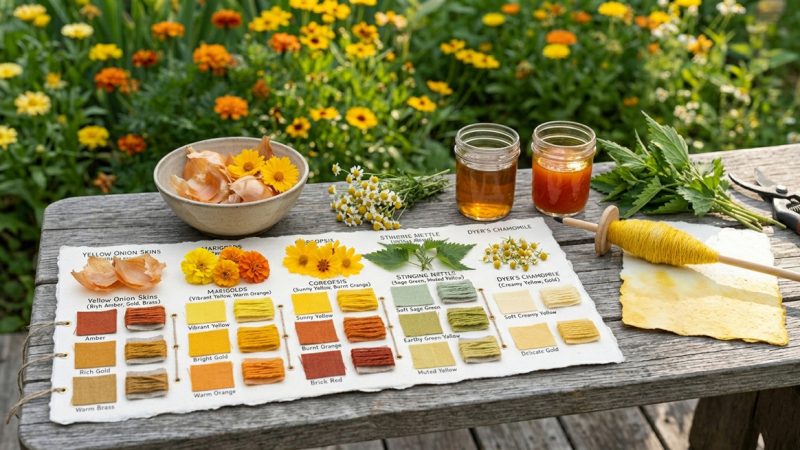
– Marigold (Tagetes erecta) (petals) – produces a bright golden-orange color, no mordant needed.
– Onion (Allium cepa) (yellow skin – fresh or dried) – mordant: tin – bright orange
– Onion (Allium cepa) (red skin – fresh or dried) – mordant: alum – reddish orange
– Onion (Allium cepa) (yellow skin – fresh or dried) – mordant: alum – burnt orange
– Osage Orange (Maclura pomifera) (wood) produces a bright yellow-orange color, mordant with alum.
– Osage Orange (Maclura pomifera) (roots) produces a deep orange-red color, mordant with alum and/or iron.
– Persimmon (Diospyros kaki) (fruit) produces a deep orange-brown color, mordant with alum and/or iron.
– Pokeweed (Phytolacca americana) (fresh or dried fruit) mordant: chrome – rust
– Pomegranate (skins)– with alum anywhere from orange to khaki green.
– Saffron (Crocus sativus) (stigmas) – produces a rich yellow-orange color, mordant with alum.
– Safflower (Carthamus tinctorius) (fresh or dried flowers) produces a bright yellow-orange color- mordant: alum, tin – rust
– Sassafras (leaves)
– St. John’s Wort (Hypericum perforatum) – (fresh flowers) – mordant: tin – orange/red
– Sweet Potato (Ipomoea batatas) (roots) produces a soft orange-yellow color, mordant with alum.
– Turmeric (Curcuma longa) dyed cloth will turn orange or red if it is dipped in lye.
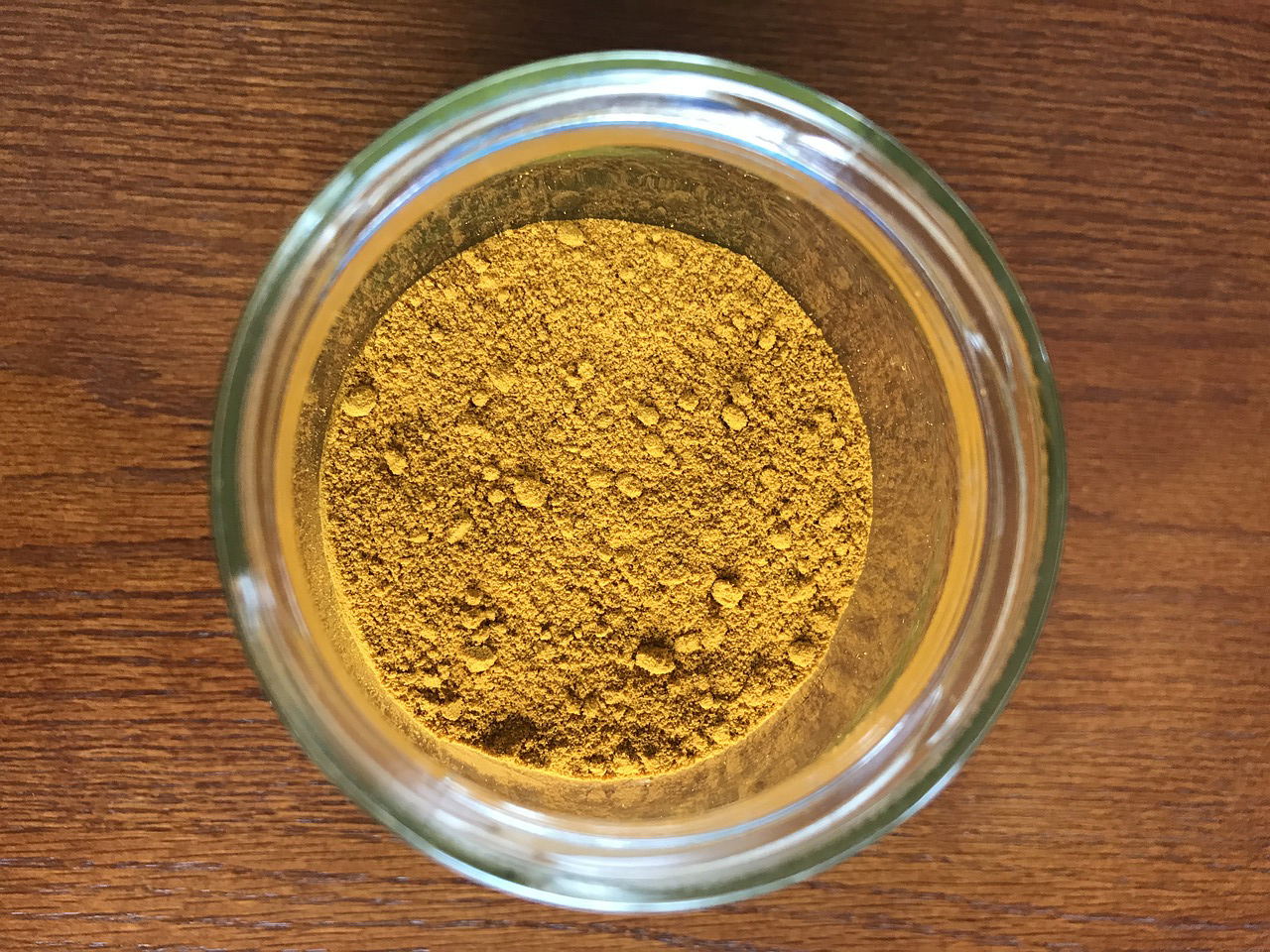
– Turmeric (Curcuma longa) (root) produces a bright yellow-orange color, mordant with alum.
– Turpentine Weed (Euphorbia lathyris) (seed pods) – produces a bright orange color, mordant with alum.
– Weld (Reseda luteola) (leaves) – produces a bright yellow-green color, mordant with alum.
Shades of BROWN
–Alder (Female Catkins (Cones in late summer or fall) -mordant: Iron – deep rich brown, olive green
– Amur Maple (Acer Ginnala)- black, blue, brown from dried leaves.
– Barberry – (all plant, fresh or dried ) – mordant: alum – tan
– Beetroot –Dark Brown with FeSO4
– Birch (bark) – Light brown/ buff – Alum to set
– Black walnut (Juglans nigra) (hulls) – Brown
Used by Native American tribes and later in Europe.
Mordant: alum.
– Broom – (bark) – yellow/brown
– Broom Sedge – golden yellow and brown
– Butternut Tree (Juglans cinerea) – (bark) -dark brown – boil the bark down to concentrated form
– Burdock
– Cascara sagrada
– Coffee Grinds
– Colorado Fir – (bark) – tan
– Coneflower (flowers) – brownish green ; leaves and stems – gold
– Comfrey ( Symphytum officinale) (leaves) – mordant: iron – brown
– Dandelion (roots) brown
– Fennel (Foeniculum vulgare) (fresh flowers, leaves) mordant: chrome – golden brown
– Fennel (Foeniculum vulgare) (fresh tops) mordant: iron – brown
– Geranium
– Goldenrod (shoots ) – deep brown
– Hollyhock (Alcea rosea) (petals) – brown
– Hops
– Ivy – (twigs) – yellow/brown
– Juniper Berries (Juniperus)
– Madder (Rubia tinctorum ) (roots) – mordant: iron – brown
– Oak Oak (Quercus species) – (fresh or dried bark) – mordant: alum – sandy tan/oak brown
With an alum mordant, the inner bark (the cambium layer) yields a classic, warm “oak” brown or sandy tan.
: Similar to the acorns, oak bark is a powerful source of natural tannins. This makes it an incredibly stable dye for cotton and linen.
>> Harvesting Tip: For the best color and to protect the tree, it is best to harvest bark from fallen branches or recently pruned wood rather than the trunk of a living tree.
–Oak (Quercus species) – (boiled acorns) – mordant: alum – tan/soft brown
– Onion (Allium cepa) (red skin – fresh or dried) – mordant: tin – tan/brown
– Onion (Allium cepa) (yellow skin – fresh or dried) – mordant: iron – brown
– Onion (Allium cepa) (red skin – fresh or dried) – mordant: chrome – dark tan
– Oregon Grape (Mahonia Aquifolium) (fresh roots) mordant: chrome – tan
– Oregon Grape (Mahonia Aquifolium) (fresh roots) mordant: alum – light yellow brown
– Oregon Grape (Mahonia Aquifolium) (fresh, all plant) mordant: alum – khaki gold
– Oregano – (Dried stalk) – Deep brown- Black
– Pine Tree Bark – light medium brown. Needs no mordant.
– Pokeweed (Phytolacca americana) (dried fruit) mordant: alum – brown
– Potentilla (Potentilla verna) (fresh roots) mordant: chrome – brown/red
– Poplar
– Quince (blossoms) – beige on wool – mordant: alum, warm gray – mordant: iron
– Raspberry (tan)
– St John’s Wort (blossom) – brown
– St. John’s Wort (Hypericum perforatum) – (fresh stems) – mordant: alum – brown/red
– Sumac (leaves) – tan
– Sunflower (tan)
– Sweet Woodruff (Galium odoratium) (fresh leaves, stems) mordant: alum – tan
– Tea Bags – light brown, tan
– Uva Ursi (Arctostaphylos Uva-ursi) (fresh leaves) – camel
– Walnut (hulls) – deep brown (wear gloves) – black
– White Birch – (inner bark) – brown
– White Maple (bark) – Light brown/ buff – Alum to set
– Wild plum root will give a reddish or rusty brown.
– Yellow dock (shades of brown)
Shades of PINK
– Avocado from skin and seed (shredded) – a light pink hue.
– Bloodroot (Sanguinaria canadensis) (roots – fresh)- mordant: alum – reddish pink
– Camilla -It’s a nice pink-magenta. With lemon and salt.
– Cherries
– Dandelion (Taraxacum officinale) (All plant – fresh) – Magenta
– Grand Fir – (Bark) Pink
– Hollyhock (Alcea spp.) (Flowers) – Pink/purple – Used by Native American tribes and later in Europe. Mordant: alum.
– Lichens – A pink, brown, or wine colored dye can be produced from a lichen known as British soldiers.
– Madder (Rubia tinctorum ) (Roots must be dried and then dried up into a fine powder. The powder is then added to a pot of water and simmered for a couple of hours to extract the dye.) – Pink, coral – stunning shades of red. Mordant: Alum or cream of tartar. The mordant must be a warm to help bring out the full range of reds and pinks in the dye.
– Pokeweed
– Raspberries (red)
– Red Onion Skins (Allium cepa) (Skins of onions) – Red/pink – Used since ancient times, especially in Asia and Europe. Mordant: alum.
– Roses and Lavender, with a little mint and some lemon juice to activate the alkaloids can make both a brilliant pink dye and a very tasty pink lemonade.
– Pokeweed (Phytolacca americana) (Fresh fruit) Mordant: alum – pink
– Purple coneflower (Echinacea purpurea) (Whole plant) – Pink/purple – Used by Native American tribes for medicinal and dyeing purposes. Mordant: alum.
– Sorrel
– Strawberries
– Woad (Isatis tinctoria) (Young leaves) – Mordant: alum – Pink
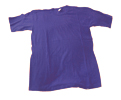
Shades of BLUE – PURPLE
– Blackberry (Rubus species) – (crushed fruit) – mordant: alum – strong purple/magenta
–Blackberry (Rubus species) – (crushed fruit) – mordant: iron – muted purple/grey
While blackberry fruit produces a stunningly vibrant purple, berry dyes are notorious for being light-sensitive. To help the color last, it is best used on protein fibers (wool/silk) and kept out of direct sunlight
The Salt Secret: A traditional trick for “setting” berry dyes is to add a generous amount of salt to the dye bath. This acts as a fixative and helps the purple tones bond more deeply to the fiber.
The pH Shift: The pigment in blackberries (anthocyanins) is pH-sensitive. Adding a little vinegar can push the color toward a brighter pink-purple, while a pinch of baking soda can shift it toward a blue-purple.
– Blueberries
– Cherry (roots)
– Cornflower – (petals) blue dye with alum, water
– Dogwood (bark) – blue
– Dogwood – (fruit) greenish-blue
– Elderberry (Sambucus spp.) (Berries) – Mordant: tin- Blue/gray
– Elderberry (Sambucus spp.) (Berries) – Mordant: chrome – Blue
– Elderberry (Sambucus nigra) (Berries) – Purple/black – Used by Native American tribes and later in Europe. Mordant: alum.
– Geranium (Geranium sylvaticum) – blue/gray
– Grapes (purple)
–Hopi Black Dye Sunflower (Helianthus annuus) – (mature seeds) – mordant: alum – purple/lavender
– Hyacinth (Hyacinthus orientalis) – (fresh flowers) – mordant: alum – blue/blue-grey
The pigment in Hyacinth is based on anthocyanins. While it can produce a beautiful blue on the fiber, the color is often “fugitive” (sensitive to light and washing).
To maintain the blue hue, keep the dye bath at a neutral pH. Adding an acid (like vinegar) will shift the blue toward a pink or orchid, while an alkali (like baking soda) can push it toward a green or teal.
Many dyers find that a long cold soak (rather than boiling) helps preserve the delicate blue pigments of the flowers, as high heat can quickly turn them to a muddy tan.
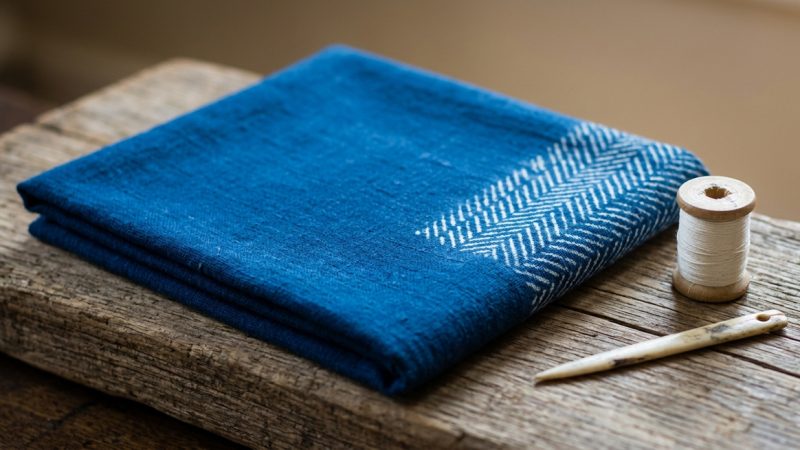
– Indigo (Indigofera Tinctoria) (leaves) – deep blue
Mordant: It can be used with several mordants, such as alum, iron, and tin. However, indigo is unique in that it does not require a mordant to bind to the fabric; instead, the dye molecules bond directly to the fibers.
– Japanese indigo (deep blue)
– Lady’s Bedstraw (Gelium verum) (roots -fresh or dried) – Mordant: iron – plum
– Logwood (Haematoxylum campechianum) (Wood) – Purple – Logwood is a tree that produces purple-black dye. Logwood is a deep and rich dye that can be difficult to work with, but it has good lightfastness and produces unique shades of purple and gray. – Used by the Mayas and later in Europe. – Mordant: Alum, iron, copper.
– Raspberry -(fruit) purple/blue
– Red cabbage
– Red Cedar Root (purple)
– Red Maple Tree (purple)(inner bark)
– Madder (Rubia tinctorum ) (fresh roots) purple
– Mulberries (royal purple)
– Nearly Black Iris – (dark bluish purple) alum mordant
– Oregon Grape (Mahonia Aquifolium) -(fresh fruit) mordant: alum – blue/purple
– Pokeweed (Phytolacca americana) (roots) – bright purple dye
Pokeweed is a weed that is native to North America. It produces a bright purple dye when the roots are boiled. Pokeweed is a potent dye, so only a small amount of plant material is needed to produce a strong color.
– Queen Anne’s Lace
– Saffron – (petals) blue/green
– Purple Iris – blue
– Smilex (S. aspera) – blue
– Sweetgum (bark) – purple / black
– Woad (Isatis tinctoria) (fresh, young leaves) – Pale to mid blue color depending on the type of fabric and the amount of woad used.
Used since ancient times, especially in Europe.
Mordant: alum.
-Wood Cranesbill (Geranium sylvaticum) – (flowers) – mordant: alum – blue/gray
-Wood Cranesbill (Geranium sylvaticum) – (flowers) – mordant: iron – dark gray/blue-black
Historical Significance: This specific wild geranium is famous in Scandinavian folk tradition (often called Skogsnäva) for producing a remarkably stable blue dye for a flower.
The “Blue” Secret: Unlike many other blue flowers that fade instantly, Geranium sylvaticum contains a unique combination of tannins and anthocyanins. This allows the blue-gray color to bond more effectively to wool and silk.
To pull out the clearest blue tones, some traditional recipes suggest adding a tiny pinch of baking soda to the dye bath to keep it slightly alkaline.
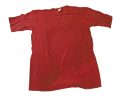
Shades of RED – BROWN
– Bamboo (Bambusa species) – (boiled leaves or shoots) – mordant: alum (plus pH shift) – turkey red/deep orange-red – Fiber Choice: Cotton or Linen
The “Turkey Red” Challenge: True “Turkey Red” is historically one of the most complex colors to achieve. While bamboo leaves can yield a warm, reddish-tan or deep burnt orange, reaching a vibrant “Turkey Red” often requires a multi-step process involving an oil pretreatment (like sulfonated castor oil) and an alum mordant to help the pigment saturate the fibers.
To get the richest reds from bamboo, the leaves should be boiled for at least an hour. The resulting dye bath is highly sensitive to pH; adding a small amount of alkali (like soda ash) can push the color from a golden tan toward a much deeper, brick-red or “turkey” tone.
-Bedstraw (Galium triflorum) – (roots) – mordant: alum – red
Preparation: Thoroughly wash the roots to remove all soil, then chop them finely or crush them to expose as much surface area as possible before soaking.
The “Northern Madder”: Galium triflorum (Sweet-scented Bedstraw) is a North American relative of the famous Dyer’s Madder (Rubia tinctorum). Like its cousin, the roots contain alizarin, the chemical responsible for deep, lightfast reds.
Harvesting: The roots are quite fine, so it takes a large quantity to produce a strong red. Traditionally, they are harvested in the autumn when the red pigment is most concentrated in the root system.
Temperature Control: To achieve a true red, keep the dye bath below a simmer (around 140°F–160°F or 60°C–70°C). If the water gets too hot or reaches a rolling boil, the red pigment can shift toward a duller brown or brick-orange.
– Beets – deep red
– Bloodroot (Sanguinaria canadensis) (root) – red
– Brazilwood (Caesalpinia echinata) (wood) Mordant: Alum – red
– Burdock (Arctium lappa) – (roots) – mordant: iron – grey/brown
– Canadian Hemlock – (bark) reddish brown
– Cascara sagrada
– Chokecherries
– Cochineal (Dactylopius coccus) (The insects are harvested and dried, then ground into a powder that can be used to dye textiles) – a range of shades from pink, bright red to deep burgundy.
Cochineal is an insect that feeds on prickly pear cactus in South America and Mexico. It produces a vivid red dye that has been used for centuries. Cochineal was a hugely valuable trade commodity during the colonial period in South America.
Mordant: It can be used with alum, iron, cream of tartar, and tin mordants. Cochineal is a strong and versatile dye that can create a range of shades from pink to deep burgundy.
– Comfrey ( Symphytum officinale)
– Crab Apple – (bark) – red/yellow
– Dandelion (Taraxacum officinale) (root)
– Dock (Rumex spp.) (fresh young leaves) -mordant: chrome – red
Dyer’s Coreopsis (Coreopsis tinctoria) (blossoms) – rusty warm red
– Elderberry (Sambucus spp.)
– Fennel
– Geranium
– Hibiscus Flowers (dried)
– Hops
– Japanese Yew – (heartwood) – brown dye
– Juniper
– Kool-aid
– Lady’s Bedstraw (Gelium verum) (roots -fresh or dried) – mordant: alum – red
– Madder (Rubia tinctorum ) (fresh roots) – mordant: alum – deep brick red
– Madder (Rubia tinctorum ) (fresh roots) – mordant: chrome – garnet red
– Onion
– Pokeweed (Phytolacca americana) (fresh fruit) mordant: alum – red
– Pokeweed (Phytolacca americana) (fresh fruit) mordant: tin – red
– Pomegranate – (whole or the peel of) Between purple-red to pink from fresh pomegranate, and a brown color from very overripe (beginning to rot) pomegranate.
– Poplar
– Potentilla
– Red leaves will give a reddish brown color I use salt to set the dye.
– Rose (hips)
– St. John’s Wort – (whole plant) soaked in alcohol – red
–Safflower (Carthamus tinctorius) – (fresh or dried petals) – mordant: none (pH shift) – pink/red
The Extraction Process
-
Wash Away the Yellow: The red pigment is hidden by a water-soluble yellow dye. Place petals in a mesh bag and knead them in plain water. Repeatedly dump and refresh the water until it runs clear. The petals will now look dull, but the red (Carthamin) remains.
-
Extract the Red (Alkaline Step): Submerge the washed petals in a bath of room-temperature water. Add an alkali (see list below) to raise the pH to 11. The water will turn a vibrant, deep red as the pigment dissolves.
-
Strain: Remove and discard the spent petals, keeping the deep red liquid.
-
Set the Dye (Acidic Shift): Submerge your cotton or linen fabric into the red bath. Slowly add an acid (like white vinegar or citric acid) to lower the pH to 6. This shift forces the pigment to “crash” out of the water and bond directly to the fibers.
Common Alkalis for Step 2
-
Washing Soda (Sodium Carbonate): The most effective modern choice for deep reds.
-
Wood Ash Water: The traditional pioneer method (water filtered through hardwood ashes).
-
Baking Soda: A milder option; usually produces softer pinks rather than deep reds.
-
Ammonia: Effective, but has a very strong, unpleasant odor.
Important Note: Carthamin is extremely heat-sensitive. Never heat the red dye bath. Keep the temperature below 86°F (30°C). Excess heat will degrade the pigment into a dull orange or muddy brown.
– Sumac (fruit) – light red
– Sweet Woodruff (Galium odoratium) (fresh roots) mordant: alum – red
– Sycamore (bark)- red
– Wild ripe Blackberries
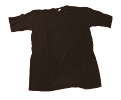
Shades of GRAY-BLACK
–Alder(Alnus glutinosa or Alnus rubra) – (fresh or dried bark) – mordant: iron – charcoal/black
All parts of the Alder tree are high in tannins. This makes it an incredibly reliable dye for cellulose fibers (cotton/linen) and protein fibers (wool/silk).
– Blackberry
– Black Walnut
– Butternut Hulls
– Elder
– Elderberry (Sambucus spp.) (fresh bark) – mordant: iron – gray
– Carob (Ceratonia siliqua) – (boiled pods) – mordant: iron – gray (use on cotton)
Carob pods are naturally high in tannins. When these tannins meet an iron mordant (or an iron “after-bath”), they react to create beautiful, lightfast grays and charcoal tones on cotton.
-
Without Iron: If you boil the pods without a metal mordant, you will typically get a soft, warm beige or light tan.
-
Preparation: Since the pods are tough, they require a long simmer (about 1–2 hours) to fully extract the pigment before adding your fiber.
–Hopi Black Dye Sunflower (Helianthus annuus) – (mature dark seeds) – mordant: iron – grey/black (use for wool and cotton)
– Iris (Iris germanica or Iris pseudacorus) – (roots/rhizomes) – mordant: iron – black
-
The “Black Dye” Secret: To get a true black from iris roots, they must be combined with an iron mordant. The tannins in the roots react with the iron to create a deep, permanent black that was historically used for wool and silk.
-
Traditionally, for the best color, the roots are dug in the autumn when the tannins are most concentrated. Some dyers prefer to chop and “ferment” the roots in water for a few days before boiling to deepen the resulting shade.
-
Iris Flowers vs. Roots: While the blue flowers can yield a fugitive (fading) blue or green, the roots are the part used for a lightfast, permanent dye.
– Meadowsweet makes an amazing black dye.
– Oak galls – makes a good black dye.
– Oak (Quercus species) – (fresh or dried bark) – mordant: iron – charcoal grey/black
>> Harvesting Tip: For the best color and to protect the tree, it is best to harvest bark from fallen branches or recently pruned wood rather than the trunk of a living tree
– Poplar
– Raspberry
– Rusty nails & vinegar – set with Alum
– Sawthorn Oak – (seed cups) – black
– Sumac (leaves) (Black)
– Walnut (hull) – black
– Yarrow
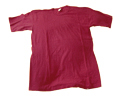
Shades of RED – PURPLE
– Basil – purplish grey
– Beluga Black Lentils – soaked in water overnight .. yield a dark purplish / black water. The color is washfast and lightfast and needs NO MORDANT and it lasts – a beautiful milk chocolate brown (when super thick) … to a lighter medium brown or light brown when watered down.
– Hibiscus (flowers, dark red or purple ones) – red-purple.
– Dark Hollyhock (petals) – mauve
– Daylilies (old blooms)
– Huckleberry – lavender (can use it for dye and also for ink.)
– Lady’s Bedstraw (Gelium verum) (roots -fresh or dried) – mordant: chrome – purplish red
– Logwood (is a good purple but you have to watch it as it dyes quick when the pot is fresh. Also it exhausts fast. We use alum to mordant and using iron can give you logwood gray.)
– Pokeweed (berries)
– Portulaca – (flowers, dried and crushed to a powder) use with a vinegar orsalt mordant, can produce strong magentas, reds, scarlets, oranges and yellows (depending upon the color of the flower)
– Potentilla (Potentilla verna) (fresh roots) mordant: iron – purple-red
– Safflower – (flowers, soaked in alcohol) – red
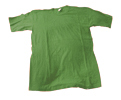
Shades of GREEN
– Agrimony
– Angelica
– Artemisia species provide a range of greens from baby’s breath to nettle green.
– Artichokes
– Barberry root (wool was dyed a greenish bronze-gold)
– Bayberry ( Berberis vulgaris) (all plant: fresh or dried) – mordant: iron – dark green
– Black-Eyed Susans (Rudbeckia hirta) – bright olive/apple green
– Broom – (stem) green
-Burdock (Arctium lappa) – (leaves and stems) – mordant: alum – yellow/green
Fresh summer leaves and stems yield a soft, sunny yellow. If you harvest the large, mature leaves later in the season, the dye bath often shifts toward a more muted chartreuse or olive green.
While the leaves are most common for color, the deep taproots can be boiled to produce subtle, earthy tans. When an iron mordant is added to a root bath, it “saddens” the color into a sophisticated, lightfast dove grey.
Preparation: Because burdock leaves are large and fibrous, they should be chopped and soaked overnight before simmering to ensure the most vibrant pigment extraction.
– Camellia (Camellia japonica) – (pink or red petals) – mordant: alum – green
– Camellia (Camellia japonica) – (pink or red petals) – mordant: iron – olive green/grey
-
This is a classic example of “what you see is NOT what you get” in natural dyeing. Even though the petals are pink or red, they contain pigments that typically yield a soft, grassy green or a muted yellow-green when processed with an alum mordant.
-
To preserve the green tones, it is best to use a low-heat steep rather than a hard boil. High temperatures can cause the delicate pigments to break down into a muddy tan.
-
Adding an iron mordant (or an iron after-bath) will quickly “sadden” the green into a deep, earthy olive or a sophisticated greenish-grey.
– Chamomile (leaves) – green
– Coneflower (flowers) – green
– Dock (Rumex spp.)(fresh leaves) – mordant: iron – dark green
– Foxglove – (flowers) apple green
– Grass (yellow green)
– Hydrangea (flowers) – alum mordant, added some copper and it came out a beautiful celery green
–Indigo Leaf – light blue green (on silk) – salt as a fixative.
– Larkspur – green – alum
– Lilac – (flowers) – green
– Lily-of-the-valley (light green) be careful what you do with the spent dye bath. The plant is toxic so try to avoid pouring it down the drain into the water supply.
– Majoram (Origanum Majorana) – (fresh whole tops) – mordant: alum – green
– Majoram (Origanum Majorana) – (fresh whole tops) – mordant: chrome – olive green
– Mulga Acacia – (seed pods) – green
– Nettle
– Peach – (leaves) yellow/green
– Peony (flowers) – pale lime green
– Peppermint – dark kakhi green color
– Pigweed (entire plant) yellow green
– Plantain Roots
– Purple Milkweed – (flowers & leaves) – green
– Queen Anne’s Lace – pale green
– Red onion (skin) (a medium green, lighter than
forest green)
– Red Pine (needles) green
– Sage (Salvia officinalis) (fresh tops) – mordant: iron – green gray
– Shaggy Mane Mushroom (Coprinus comatus) (entire mushroom) – Heat the mushrooms in water in a cast iron pot. – Olive Green
– Snapdragon – (flowers) – green
– Spinach (leaves)
– Sorrel (roots) – dark green
– Tansy (Tanacetum vulgare) (fresh tops) mordant: iron – dark green
– Tea Tree – (flowers) green/black
– Uva Ursi (Arctostaphylos Uva-ursi) (fresh, all plant) – mordant: alum and iron – green
– White Ash – (bark) – yellow
– Wild Mustard – (flowers) yellow/greenish (semi-permanent)
– Yarrow – (flowers) yellow & green shades
– Yarrow ( Achillea Millefolium) (Fresh, all plant ) mordant: iron- olive green
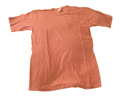
Shades of PEACH-SALMON
-Annatto seed (Achiote powder) – orange (all parts); no mordant needed; Bixa orellana.
-Annatto (Bixa orellana) (Seeds) Mordant with alum or tin
-Avocado (Persea americana) (Pits or skins) Mordant with alum or iron
– Balm (blossom) – rose pink
– Broom Flower
–Cherry Bark (Prunus spp.) (Bark) Mordant with alum or iron
-Coreopsis (Coreopsis tinctoria) (Whole plant) Mordant with alum or tin
-Cutch (Acacia catechu) (Heartwood) Mordant with alum or iron
-Elderberry (Sambucus spp.) (Berries) Mordant with alum or iron
-Goldenrod (Solidago spp.) (Flowers) Mordant with alum or tin
-Hibiscus (Hibiscus spp.) (Flowers) Mordant with alum or tin
-Indigo (Indigofera tinctoria) (Leaves) Mordant with alum or iron
-Iris (Iris germanica) (Rhizomes) Mordant with alum or tin
– Jewelweed – orange/peach
-Logwood (Haematoxylum campechianum) (Heartwood) Mordant with alum or iron
–Madder (Rubia tinctorum) (Root) Mordant with alum or tin
–Marigold (Tagetes spp.) (Flowers) Mordant with alum or tin
-Osage orange (Maclura pomifera) (Wood) Mordant with alum or tin
– Plum tree (roots) (salmon color on wool with alum)
-Pomegranate (Punica granatum) (Rind) Mordant with alum or iron
-Red Sandalwood (Pterocarpus santalinus) (Heartwood) Mordant with alum or iron
-Rhubarb (Rheum spp.) (Roots) Mordant with alum or tin
–Safflower (Carthamus tinctorius) (Flowers) No mordant needed
-Saffron (Crocus sativus) (Stigmas) Mordant with alum or tin
-Sappanwood (Caesalpinia sappan) (Wood) Mordant with alum or tin
-St. John’s Wort (Hypericum perforatum) (Flowers) Mordant with alum or tin
-Sorghum (Sorghum bicolor) (Stalks) Mordant with alum
-Sumac (Rhus spp.) (Leaves) Mordant with alum or tin
-Turmeric (Curcuma longa) (Rhizomes) Mordant with alum or tin
– Virginia Creeper – (fruit) – pink (all parts); alum mordant; Peach.
– Weeping Willow (Wood and Bark) makes a peachy brown (the tannin acts as a mordant)
-Weld (Reseda luteola) (Whole plant) Mordant with alum

Shades of CHARTREUSE
– Betony (Stachys officinalis) (all plant – fresh ) – mordant: alum – chartreuse
– Broom ( Cytisus scoparius) (tops) – mordant: alum – green yellow
– Feverfew ( Chrysanthemum Parthenium) (fresh leaves, stems) – mordant: chrome – greenish yellow
– Foxglove ( Digitalis purpurea) (fresh flowers) – mordant: alum – chartreuse
– Goldenrod (Solidago spp.)(all plant – fresh) – mordant: iron – yellow/green
– Nettle (Uritca dioica) )(all plant – fresh) – mordant: alum- yellowish green
– Rosemary (Rosmarinus officinalis) (fresh flowers, leaves) mordant: alum – yellow-green
– Tansy (Tanacetum vulgare) (fresh young leaves) mordant: alum – yellowish green
– Tansy (Tanacetum vulgare) (fresh flowers) mordant: alum – greenish/yellow
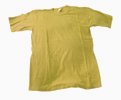
Shades of YELLOW-WHEAT
– Agrimony (fresh leaves, stems) – mordant: alum – brassy yellow
– Alfalfa (seeds) – yellow
– Bay leaves – yellow
– Barberry ( Berberis vulgaris) (inner bark, fresh or dried) – yellow
– Barberry ( Berberis vulgaris) (roots, bark, fresh or dried) – mordant: tin – yellow
– Beetroot (yellow) (alum & K2Cr2O7)
– Broom ( Cytisus scoparius)(fresh flowers) – mordant: chrome – deep yellow
– Broom ( Cytisus scoparius) (fresh flowers) – mordant: alum – bright yellow
– Burdock – yellow
– Chamomile (Anthemis tinctoria) (whole plant) – yellow
Used since medieval times in Europe.
Mordant: alum.
– Chamomile, Roman (Chamaemelium nobile)(fresh flowers) – mordant: alum – bright yellow
– Celery (leaves)
– Crocus – yellow
– Daffodil (flower heads after they have died); alum mordant
– Dahlia Flowers (Red, yellow, orange flowers) make a lovely yellow to orange dye for wool.
– Dandelion (Taraxacum officinale) (fresh flowers) – mordant: alum – soft yellow
– Dandelion (Taraxacum officinale) (fresh flowers) – mordant: tin – yellow
– Dock (Rumex spp.) (Whole plant) – Yellow/brown – Used since ancient times, especially in Europe. Mordant: alum.
– Dock (Rumex spp.) (Fresh roots) – Deep Yellow – Mordant: alum
– Dock (Rumex spp.) (Fresh leaves) – Yellow – Mordant: alum
– Dock (Rumex spp.) (Fresh late leaves) – Mordant: Chrome – gold
– Dyer’s Greenwood (Shoots) – yellow
– Elderberry (Sambucus spp.) (fresh leaves) – mordant: alum – soft yellow
– Elderberry (Sambucus spp.) (fresh leaves) – mordant: chrome- deep yellow
– Fennel (Foeniculum vulgare) (fresh flowers, leaves) mordant: alum – mustard yellow
– Fenugreek – yellow
– Fustic (Chlorophora tinctoria or Maclura tinctoria) (wood) – yellow
– Golden Marguerite (Anthemis tinctoria)(fresh or dried flowers) – mordant: tin – yellow
– Golden Marguerite (Anthemis tinctoria)(fresh or dried flowers) – mordant: alum – yellow buff
– Goldenrod (Solidago spp.) (Whole plant) – Yellow – Used by Native American tribes and later by settlers in North America. Mordant: alum.
– Goldenrod (Solidago spp.)(flowers – fresh) – Mordant: chrome – gold
– Goldenrod (Solidago spp.)(flowers – fresh) – Mordant: tin – bright yellow
– Grindelia – yellow
– Heather – (plant) – yellow
– Hickory leaves (yellow) if plenty of leaves are boiled and salt added.
– Horseradish – yellow
– Lady’s Bedstraw (Gelium verum) (tops -fresh) – mordant: alum – dull yellow
– Larkspur – yellow
– Lavender Cotton (Santolina Chamaecyparissus) (flowers, leaves -fresh) – mordant: chrome – gold
– Lavender Cotton (Santolina Chamaecyparissus) (flowers, leaves -fresh) – mordant: alum – yellow
– Marigold (Tagetes erecta or Calendula spp.) (Flowers – fresh or dried) – bright yellow
Marigolds are a hardy annual plant that produce bright orange and yellow flowers. The yellow flowers producing a bright yellow hue and the orange flowers producing a softer, peachy color. Marigold dyeing is an easy process that involves boiling the flowers in water and soaking the fabric in the dye bath. Used in Mexico and Central America for medicinal and dyeing purposes.
Mordant: Alum – Yellow/tan
– Marigold (Tagetes spp. or Calendula spp.) (flowers – fresh or dried) – mordant: chrome – gold
– Mimosa – (flowers) yellow
– Mullein (leaf and root) pale yellow. *careful, because the little fuzzy hairs can make one itchy!
– Mullein (verbascum thapsus) (flowers) bright yellow or light green.
– Nettle (Uritca dioica) )(all plant – fresh) – mordant: chrome – tan
– Old man’s beard lichen – yellow/brown/orange shades
– Onion (Allium cepa) (yellow skin – fresh or dried) – mordant: alum – yellow
– Onion (Allium cepa) (red skin – fresh or dried) – mordant: chrome – gold
– Onion (Allium cepa) (yellow skin – fresh or dried) – mordant: chrome – brass
– Oregon-grape roots – yellow
– Osage Orange also known as Bois d’arc or hedgeapple (heartwood, inner bark, wood, shavings or sawdust) (pale yellow)
– Oxallis (wood sorrels) (Flowers) – the one with the yellow flowers. Use the flower heads, some stem ok. It is nearly fluorescent yellow, and quite colorfast on alum mordanted wool.
If the oxalis flowers are fermented or if a small dash of cloudy ammonia is added to the dye bath (made alkaline) the fluorescent yellow becomes fluorescent orange. Usually I do this as an after-bath, once I have the initial color. Useful for shifting the dye shade, and some good surprises in store!
– Queen Anne’s Lace
– Paprika -pale yellow – light orange
– Peach (leaves) – yellow
– Plaintain (Plantago major) (fresh, all plant) – mordant: alum – dull yellow
– Plaintain (Plantago major) (fresh, all plant) – mordant: chrome – camel
– Pomegranate (peel) – yellow
– Red Clover (whole blossom, leaves and stem) alum mordant – gold
– Saffron (Crocus sativus) (Stigmas of flowers) – yellow
Used since ancient times, especially in Asia.
Mordant: alum.
– Safflower (Carthamus tinctorius) (fresh or dried flowers) – mordant: alum – yellow
– Safflower (Carthamus tinctorius) (fresh or dried flowers) – mordant: iron – brass
– Sage (Salvia officinalis) (fresh tops) – mordant: alum – yellow
– Sage (Salvia officinalis) (fresh tops) – mordant: chrome – deep yellow
– Salsify – yellow
– Sassafras (bark)- yellow
– St. John’s Wort (Hypericum perforatum) – (flowers & leaves) – gold/yellow
– St. John’s Wort (Hypericum perforatum) – (fresh tops) – mordant: alum – medium yellow
– St. John’s Wort (Hypericum perforatum) – (fresh tops) – mordant: chrome – bright yellow
– Sumac (bark) – The inner pith of Sumac branches can produce a super bright yellow color.
– Sunflower – (flowers) – yellow
– Syrian Rue (glows under black light)
– Tansy (Tanacetum vulgare) (Whole plant) – Yellow – Used since medieval times in Europe. Mordant: alum.
– Tea ( ecru color)
– Turmeric (Curcuma longa) (Root) – Bright yellow – Spice that is commonly used in Indian and Southeast Asian cuisine. Mordant: Mix 1 part alum and 1 part cream of tartar with 10 parts water. Heat until the powder dissolves. Then add your fabric or yarn to the mordant and let sit for at least an hour before dyeing with the turmeric.
– Weld (Reseda luteola) (flowers) (leaves are harvested and dried before dyeing fabrics) – yellow
Weld is a bushy plant native to Europe and Asia that produces a yellow dye. It has been used for dyeing textiles for over 2,000 years and was a popular dye during the Middle Ages. Weld is an easy-to-grow plant that produces large quantities of dye pigment.
Mordant: It can be used with alum, iron, and tin mordants. Weld is a powerful dye that can produce bright yellows, but it can also fade quickly if not properly treated.
– White mulberry tree (bark) Cream color onto white or off-white wool. Alum mordant.
– Willow (leaves)
– Yarrow ( Achillea Millefolium) (Fresh flowers) mordant: alum – yellow and gold
– Yellow cone flower (whole flower head); chrome mordant; Brass to Greeney-Brass.
– Yellow, Curly, Bitter, or Butter Dock (despite various leaf shapes, all have a bright yellow taproot) gives you a yellow/flesh color.
Did we miss a plant? If so add it to the comments below. Thanks!
—————————————————————————————–
The Author:
Pioneerthinking.com – Ingredients for a Simple Life.
As an expert horticulturist, I have a deep passion for the vibrant colors found in nature. My hands-on experience extends to both creating my own paint pigments and mastering the art of fabric dyeing. While I initially created this guide, “Making Natural Dyes from Plants,” it has been wonderfully enriched by the generous contributions of our readers—a collaborative community of both seasoned experts and enthusiastic beginners who continue to share their knowledge and love for this craft.
©Copyright Pioneerthinking.com – All rights reserved.
For personal use only
Photo. Andreas/ Pexels
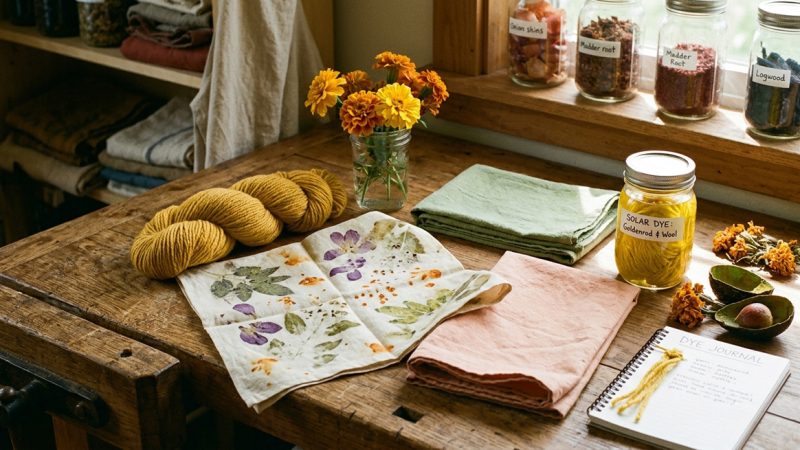

Any color of fall leaves will yield the color of the leaves or a color close to the color of the leaves. For example hickory leaves gives a good yellow if plenty of leaves are boiled and salt added.
Red leaves will give a reddish brown color I use salt to set the dye. I use this in my Cherokee Baskets.
Bloodroot will give a good orange to reddish orange color. It grows on branches and creeks here in Easter Oklahoma. It is a traditional dye used by the Cherokee to dye with. Oak bark will give a tan or oak color
Wild plum root will give a reddish or rusty brown.
You have a really interesting list of plant dyes. Some dyes you may want to add:
Syrian rue is a great yellow dye, and actually glows under a black light!
Roses and lavender, with a little mint and some lemon juice to activate the alkaloids can make both a brilliant pink dye and a very tasty pink lemonade.
Turmeric and cumin will permanently color anything bright yellow with only a little acidic fixative. Saffron will do the same to a lesser amount.
Mulberries provide a royal purple color.
Artemisia species provide a range of greens from baby’s breath to nettle green.
Sumac fruit provide a light red (but not pink). However, these are already acidic, so their use may require a stronger acid than most or simply be ready to use straight off the plant.
Osage orange is hedgeapple/boit d’arc
Paint:
Ocherous red clay (i.e. dirt) can be used to make a nice red-orange color. I don’t know how well it binds to cloth, but it can be mixed with egg yolk to make great paint. (egg tempera technique)
Malachite and turquoise can be ground up and used the same way to make similar paints, but green and turquoise colored, respectively.
Just some stuff I’ve seen around. I have used all but the sumac, and they all work wonderfully.
Mullen, leaf and root, makes a nice shade of pale yellow. I’ve heard that adding dilute sulfuric acid makes it green, though I’ve not tried it. Also, be careful, because the little fuzzy hairs can make one itchy!
Do you know about Cochineal? It’s not a plant but it grows on a plant. The little white fuzzy bugs that look like mealy bugs that are found on the “pads” of Prickly pear cactus (Opuntia sp.) They are an infestation to the plant so it helps the plant if you scrape them off.
Scrape them off the pads with a pocket knife into a plastic bag — its OK if you squish them. At home spread them on a cookie sheet and toast for about 10 minutes in the oven, till they dry up. Now you can store them or use them right away.
Make the dye bath as you describe on your web page. Use alum for mordant. On wool these will give you an intense bright red (or pink if you have used too much water. Other mordants give different colors. This was the red dye used in the blankets that were produced by the indians in the
California Missions. The plant became widespread in California because it was cultivated to produce this dye material. The color is safe, it has also been used as a food coloring.
Do you know about barberry (mahonia sp.) — it makes a wonderful yellow orange (with alum) very strong and permanent. It too was grown at the missions for this purposed. Any part of the plant will work.
Giant Coreopsis (Coreopsis gigantea — a threatened species endemic to the islands off the coast of Santa Barbara California) Yields bright permanent orange with alum. Any part of the plant will work. The color of spaghetti sauce. (I got some of this when our local botanic garden was pruning their specimens.) I’m going to be trying this with the garden variety soon as I have heard this also works.
I know there are some mushrooms that yield nice blues. I’d like to know more about that.
Thanks for your website!
Daffodil – You can add daffodil flower heads (after they have died). They make a lovely shade of gold/yellow. We used alum as a mordant.
Blackberry season is nearly upon us at harvest time so go picking and make beautiful strong purple dyes!
Hedgeapple – For a pale yellow the wood and inner bark of Bois d’arc or hedgeapple. (Maclura pomifera)
Annatto Seed
Hi, my partner and I added a new fragrance to our soap line and wanted a peachy color to complement it. For a 36 bar batch we used about 4 pinches of achiote powder (annatto seed) and were pleased with the color. It has minute flecks of a dark red in it also. We use only additives that are non-toxic and edible. Hope this helps.
I just thought you might want to know that onion peels make a great orange or yellow mattering on how long you leave it in the dye bath and whether you are using cotton or wool. I usually dye gray wools so I am usually just looking for a tint and not looking for a super bright color.
Hi, what about dandelion flower for yellow.
Onion skins and lichen makes a gorgeous gold colour.
Goldenrod makes a beautiful yellow. The color ranges from a deep golden to pale yellow depending on how much goldenrod you use and how well the material takes the dye. Also, elderberries make a lovely deep lavender color! These both are colorfast and will not fade.
Red Maple Tree
The inner bark of the Red Maple tree when combined with an iron mordant yields shades of Purple.
Shavings or sawdust from the heartwood of the Osage Orange tree yields shades of yellow.
These were done on wool. I’m not sure how they would react with other fibers.
Acorns
When preparing acorns, the byproduct of making them edible can be used as a natural dye. I cracked open the acorns with a large stone. To make the nutmeats edible you boil them in hot water and strain, then boil again with new water, until the water runs clear. When boiling them the water will turn brown (natural tannins boiling away from the acorns.) This brown liquid (natural tannic acid solution) can be used with a vinegar-based fixative for a very dark brown color to cloth. The brown color was thrown away on my first try. As I said, it is a byproduct of boiling hulled acorns, for eating. Thought this might be useful to you.
Grass makes a nice shade of green. Just boil it in water, remove grass and use the remaining as dye.
Red Cedar Root
Red Cedar root = Purple dye (Alum mordant.) Cameleon plant gives you a beautiful golden color (Alum mordant.)
Tea
Don’t forget tea. Any style of tea bag you can buy from the store or homemade tea if you live in an area where growing that is possible makes a very light nice brown.
Yellow Dyes
Two new dyes for your “Yellow” list:
(1) Red Clover (whole blossom, leaves and stem); alum mordant; Gold.
(2) Yellow cone flower (whole flower head); chrome mordant; Brass to Greeney-Brass.
One new dye for your “Peach” list:
(1) Virginia Creeper (all parts); alum mordant; Peach.
3 Best Dyes
Madder, weld, and Japanese indigo are the three very best natural dyes for temperate areas. Madder makes shades of red, weld yields a bright yellow, and Japanese indigo gives deep blues. They are all quite colorfast.
Many Dyes
Hi, I’ll be trying a bunch of different stuff for dyes pretty soon (waiting for wool and cocoons).
I’m going to try different dried herbs from the health food store, and Mexican market :). First on the list is annato. It’s been mentioned though.
I’m pretty sure dried hibiscus flowers will make a shade of red. I’ve drank hibiscus tea and a single tea bag makes an intensely tart, deep red tea. It’s high in vitamin C too (not sure how that would affect dye, unless ascorbic acid affects dye). I’ll just dump a box of it in my microwave safe bowl and start to microwave slow cooking :P. (I bought those disposable microwaveable bowls with lids just for crafting to be safe, and they’re both good and cheap). My stove’s electric so I can’t go full-on pioneer no matter what.
Plain old tea makes a nice ecru like color. It’s what they use in movies to prematurely age fabrics.
Oh, nearly forgot, Henna should make for a lovely color (I just need to experiment with mordants and curing time, will get back to you).
Dollars to doughnuts, using a copper pot changes results(chemical reaction).
I’m just going to use what’s close at hand, and when I think about it, that’s what the pioneers did too. So I’m adding kool-aid to the list, even if they didn’t have red dye # 33 in the 19th century 🙂
Yellow, Curly, Bitter, Butter Dock
Your site has an excellent list of natural dye plants and thought these few may be useful to you.
Yellow, Curly, Bitter, or Butter Dock (despite various leaf shapes, all have a bright yellow taproot) -yellow/flesh color. I have only experimented on lengths of cotton cording I had lying around, so results on wool may be drastically different. I read that this plant can produce a fairly clear yellow. Unfortunately I could only find a small plant with thin roots. It would have been difficult for me to peel all the roots of their thin bark/skin, so I decided to boil them with it still on. This produced a “wheat” shade on the cotton cord, a few shades yellower than a flesh tone. Alum seems to help the dye stick better, but is by no means necessary. Forget iron on the cotton cloth. It comes out a horrible dingy gray-brown. If I attain a true yellow with peeled roots I will send another e-mail.
When dyeing with turmeric, whose color stands up next to artificially dyed clothes, make sure you wear gloves and be careful not to splash. Otherwise your hands will be bright yellow for a week and whatever you splashed the dye on will be yellow almost forever. I learned the hard way.
If using lily-of-the-valley (light green) be careful what you do with the spent dye bath. The plant is toxic so try to avoid pouring it down the drain into the water supply. As long as there are no toxic mordants in the bath, I suggest you dump it outside.
Pokeberry is an easily accessible dye in my area, but it needs to be mordanted with alum or it will wash right out. It still is not very lightfast.
Regards, Eric
Several Dyes
Domestic plum tree’s roots also work with the same method described for the wild plum roots. I have never been able to work with the wild variety, but the dye bath seemed fairly weak for the amount of domestic plum root bark that I used. Perhaps hybridization has thinned down the dye content or the soil on the east coast doesn’t have high enough levels of the minerals needed for strong dye production. In any case, the dilute bath made a wonderful peach, almost salmon color on wool with alum.
Despite some sites’ reports that yellow dock can be used as a yellow dye, yellow dock can only be used to produce shades of brown on wool. The yellow constituent disappears upon drying the root, and dissipates while boiling.
When I used barberry root, I left the dark layer of the root under the bark on. I have never heard anyone say to remove it, but it probably should be taken off. Instead of the yellow-orange I’ve read so much about, the wool was dyed a greenish bronze-gold. In sunlight it “shines” a lovely gold color as opposed to the green tone with indoor lighting. It’s a great color but looks pitiful when placed next to the atomic yellow of a skein of wool dyed in turmeric.
The bark of the white mulberry tree, which is a terrible weed, at least on my property, will not dye a very dark shade, but does impart a great cream color onto white or off-white wool. I used alum as a mordant and the bark was very fresh. Since the mulberry does contain tannins, an iron mordant would probably have produced deeper browns or grays.
Best Regards, Eric
Paprika
I noticed that your web page said red onions give a red dye. In the past when I have used red onion skin as a dye, I have gotten a medium green, lighter than forest green, but very nice. You also might want to add paprika, which gives an ever so slightly orange shade of pale yellow and is hard to wash out.
Tumeric
Cumin, listed for yellow on your dye list does not provide color at all. All you get is water scented like Mexican or Indian food, which smells great, but isn’t what I wanted. Perhaps the writer had meant curry powder, which contains a high percentage of turmeric, which is already listed for yellow. Turmeric dyed cloth will turn orange or red if it is dipped in lye. Pour water through wood ash in a coffee filter to make lye, then pour this over the dyed cloth and allow to sit. The color changes very rapidly, so be prepared to pull the cloth out and wash it quickly, or thin down the lye before use.
Daylilies
I am a gardener and grow daylilies. One particular variety is quite tall and orange when blooming. When the bloom closes after one day of blooming, I have often been touched by the old bloom which bleeds a red/purplish juice from it and it will stain my clothing. I have just experimented with these blooms on a paper towel and pressed the juices with a rolling pin and the colors are really beautiful. Of course it is not all over as though you were in a liquid state, but maybe it could be used to do designs on paper. I tried it with an old handkerchief and the colors stained the fabric, but I didn’t get quite the nice bleeding into the fabric with a little red and yellow from the bloom as it did on the paper towel.
If anyone has any other suggestions, I would be interested in the paper dye as well as the fabric dye with these particular plants. Thanks.
Hibiscus
Dark red or purple hibiscus flowers make a red-purple dye. If it happens to be winter and you are dying to dye (pun totally intended) buy some hibiscus flower tea (I used pompadour brand hibiscus flower and rose hip tea) and simmer a bunch of bags in water to make a strong dye bath.
Woad
Woad (first year leaves). Woad gives a pale to mid blue colour depending on the type of fabric and the amount of woad used. The dye itself is indigotin, the same dye present in indigo; however indigo contains 10 times more indigotin, hence the deeper the colour.
Woad is a relatively easy plant to grow, however it will easily over-run your garden if you let it. the best way to prevent this is after its second year (its a biennial plant) when the yellow flowers are present prune the plant so just a couple of the yellow flower clusters are left as this will provide more than enough seeds for regrowth.
Beetroot
Hi, I am Deepali G. from Indore, India & am doing a project on dyeing of cotton, P/C & Polyester with beetroot. I’ve successfully applied the dye on the cotton fabric. It gave different shades with different mordants.
Dark Brown With FeSO4.
Shades of yellow with alum & K2Cr2O7.
I’d suggest you try it sometime.
With so much mystery surrounding lichen dyes, I decided to do some experimenting of my own. A pink, brown, or wine colored dye can be produced from a lichen known as British soldiers. This is a very distinctive lichen, unlike some of the others used for dyeing so it is impossible to mistake. In order to extract the dye, place the lichen in a glass jar and cover with ammonia. The lichen will soak up a lot, so it may be necessary to add more to cover it completely. Put a lid on the jar or rubber band several layers of plastic wrap over it. Within a minute or two, the ammonia will turn very dark. If a light is shone through it, it will look ruby red, but this is deceiving; the majority of the dye color is brown. Allow this mixture to soak overnight. The next day, or anytime after that (time can’t hurt) pour the ammonia out and through a coffee filter to remove debris. Don gloves and wring the remaining ammonia out of the lichens, which will now be very soft and spongy.
If you plan to make multiple batches, save this lichen, as a bit more dye can be leached out of it with further ammonia soaking, then that mixture is poured over fresh lichen to conserve all the dye possible. The ammonia should be extremely dark at this point. To make a dye bath, thin it out, 1 part ammonia to 2 parts water will produce a medium-light pink on wool, mohair, and most likely silk. It barely dyes cotton or linen at all.
Simmer prewashed and wet yarn in this mixture (Outside, please, the concentrated fumes would be very dangerous if done indoors) The dye will achieve its maximum shade rather quickly, some of which will go down the drain when washed, properly mordanted and pre-washed, or not. (this is because the dark dye bath liquid will cling to the fibers, making it seem darker than the final product) It will be shockingly light for the depth of color in the dye bath. If you want to push the pink toward wine (albeit a light wine color), add vinegar to the dye bath and simmer for a few more minutes. The acid will unlock the ability of the brown dye to color the cloth. In the basic ammonia solution is was bound up and therefore could not taint the pink. A little brown color will serve to darken the pink, making it seem like a stronger shade. Pull the cloth out immediately to prevent further darkening. If you let it go too long, however, the cloth will end up being unmistakably brown with a pink undertone. In order to get a pure brown, acidify the dye bath with vinegar after exhausting the pink dye (this is probably after only one batch of material has been dyed). Anything simmered in this dye bath will come out a medium-light brown, and the dye bath will be entirely exhausted. Be careful when using lichens as dyes as they grow very slowly and harvesting them in any great quantity will undo perhaps hundreds of years if growth. The lichen I used is growing in vast quantity on the old wood fence in my backyard. Since it is being torn down very soon and replaced, I figured I’d harvest all that I could and not let it go to waste. Good luck.
Hi! You really should mention that neither salt nor vinegar is actually a fixative. Vinegar is a pH modifier, that can be used to help in takeup of dye, and salt is an assist used to “open up” the fibers to take dye more readily, but neither one actually does anything to set the dye. You need a mordant to actually get colorfast colors. Alum is the easiest to obtain of these, McCormick’s makes alum that is sold in the spice or canning section of most grocery stores. You need to add some alum to water, bring it up to a simmer, and simmer your fiber to be dyed in the alum.
– Teresa H.
I have found that carob pod, boiled, will give a gray to cotton. Being of high tannin content, it can be used alone: I guess that the same would work from carob powder or syrup.
Regards and may God keep you well.
I stumbled across a very nice dye by deadheading my “near black” iris. It stained my fingers a very dark purple. I used an alum mordant and a silk scarf….beautiful color! Sort of a dark blue purple. Love it.
Hi I am from the UK and have only just started to dye from natural materials. I recently lost a large branch in a strong wind from our Weeping Willow. I found that I was able to get the most beautiful peachy brown from the wood and bark. The beauty of this is that is was very colour fast as the tannin acts as a mordant. Just thought that you might like to add that to the list. Love your website.
Just a note regarding Dyer’s Woad…it is considered a noxious weed in some states, so if you decide to grow it in your garden, it is probably best to grow it in a pot, and make sure that your seeds aren’t scattered by the wind.
Brazilwood – any of the red wood trees in this family produce a red color the trees are actually named after the dyes.
Logwood is a good purple but you have to watch it as it dyes quick when the pot is fresh. Also it exhausts fast. We use alum to mordant and using iron can give you logwood gray.
Pomagrante – with alum anywhere from orange to khaki green. Yellows in the orange end of the spectrum on wool and yellow green or khaki on cotton. It is high in tannin so to get the khaki color I don’t add the alum. This dye was and still is used in India. The skins are dried for future use in dyeing when the fruit is processed for food. Pomagrante color varies with the variety and the darker skinned fruit gives stronger colors. They can be grown in areas of the US. We had a bush in west texas and they are grown in california
– T. Bradford
Yellow Dye- turmeric (spice) – -bright yellow.
The red leaf buds of many maple trees make a nice red-brown color when dried, found on branches before new leaves appear only present during early spring and throughout fall.
Hi, your site is so helpful! The inner pith of Sumac branches can produce a super bright yellow color. Also, the berries are listed under pink/red, but mine have actually turned both a grey and a yellow-y color. I didn’t not use any mordants for these, and I steeped them for about 2 days in a hot bath, but the color was great. Thanks for the info on all the rest!
Huckleberry gives a good lavender color and I have used it not only for a dye but also for ink.
I live in the Pacific Northwest. We use alder bark for orange, old man’s beard lichen for various yellow/brown/orange shades, depending on the bark it grows on, and Oregon-grape roots for yellow.
I’m looking for a source of madder root to grow in my garden. Do you know where it can be purchased? The only place I’ve found so far is in Malta, which is a little far for me to travel.
I just tried Camilla and it’s a nice pink-magenta. with lemon and salt. Smelled nice too.
Hi, in the San Francisco Bay Area there is a weed fully in bloom in Jan. and Feb. And being a weed is quite hardy, prolific and hard to eradicate. Oxallis, the one with the yellow flowers. Use the flower heads, some stem ok. It is nearly fluorescent yellow, and quite colorfast on alum mordanted wool.
Hi there, I’ve heard that oak galls makes a good black dye, although I’ve never tried this myself.
I haven’t seen Dahlia on the list. Red, yellow, orange Dahlia flowers make a lovely yellow to orange dye for wool.
Iris Flower
Hello! I was just on your web page looking through the listings of plant-based dyes, and I wonder if you’ve ever tried using iris flowers? I haven’t, but this spring I had some gorgeous purple ones that bloomed from bulbs I planted last year. One of them was knocked over by hard rain, and I brought it inside and put it in a vase on a glass-topped table, still wet from the downpour. When I looked at the glass table later, there were deep purple drips dried on the glass which came up a lovely deep purple on a white towel when I cleaned them off. I’d love to experiment with this, but it’ll have to be next year as the irises are finished for the season, darn it.
Anyone there ever tried iris blooms as a dye? Maybe I’m reinventing the wheel here. Thanks …
I noticed that you didn’t have Jewelweed. It makes a lovely orange/peach color.
Peppermint makes a dark kakhi green color.
Queen Anne’s Lace give a pale green
Black-Eyed Susans give a bright olive (apple?) green
Hope this helps your list.
Walnut Husks
Hi, I read your list and I’m surprised and disappointed that Walnut isn’t on your list. Walnut husks (NOT the nut) when chopped up make a very potent stain–and it’s already color fast–no salt or vinegar needed. I chop up some walnut husks, both green ones, but also parasitized ones that are blackened, and throw them in the blender, adding some water so that they actually blend and the dye is made! It is not necessary to heat, just dip your cloth into this black gunk. I quick dip in the cold gunk leaves a dark green color. Simmering the cloth makes a dark brown to almost black.
Rinse the clothes off outside with a hose, as it will dye everything it touches! Wash them once all together to get any excess dye off.
Walnut husks are a powerful, easily gathered (in the fall), versatile and potent dye.
Several Dyes
Beluga Black Lentils …. soaked in water overnight .. yield a dark purplish / black water … that I let sit outside in the southern California sun for a day or two … and then I paint with it on cotton … and the color is washfast and lightfast and needs NO MORDANT … and it lasts – a beautiful milk chocolate brown (when super thick) … to a lighter medium brown – or light brown when watered down ….
“Timeless Seeds” out of Montana grows these Beluga Black Lentils, which I buy at my local Whole Foods market …. They are a great starting point for playing with edible / safe material to create LASTING COLOR on shirts … and clothing.
Also, I boiled some Pine Tree Bark … and put the water in my spritz bottle … sprayed around a dolphin stencil on my white cotton shirt … and voila … the dye has stayed … a second nice light-medium brown dye that needs NO MORDANT !
So happy to make colors – TOTALLY HEALTH-ILY …. and have them stay on shirts ….
Also, a recent trip to Sedona, Arizona brought me face to face with the coolest ORANGE DIRT dyed shirts … so I brought a bucket of dark orange-red earth home to LA with me … added some purified water …. “painted” through a silk screen onto some white cotton shirts … and the “paint” seems to be staying …. through two washes with detergent so far … I have a hopeful PLEASE PLEASE feeling that the colors will last … as I believe the iron that gives the clay it’s color…. will remain wash fast and light fast for the most part !
I’m off to find more …. my mission is to find colors that I can use to paint on cotton … colors which need NO MORDANT … or at least NO METAL MORDANT … I will use lemon juice, vinegar, salt … stewed leaves … or other “edible” / “organic” elements to mordant the colors .. but I don’t want to use alum or mordants ….
This is my fun, my mission ….
I just wanted to share to yall the happy findings I’ve come up into so far !
If anything is ringing a bell right now – feel free to share … Thanks !
Aloha …lots of love
Portulaca
Hi there, Thanks for a wonderful website!
Might I suggest using the flowers of Portulaca as dyes? I’ve found that the flowers, dried and crushed to a powder, and used with a vinegar or salt mordant, can produce strong magentas, reds, scarlets, oranges and yellows (depending upon the color of the flower) on wool, and less strong colors on cotton. They are not as lightfast as I’d like, but wonderful to work with.
Marigold Flower
The petals of the Marigold flower make a great yellow!
Natural Plant Dyes
I just stumbled upon your site and the page about dying. i have done a lot of natural dying myself and as a rule if you can eat it it wont give a very good colour and the colour it does give will not last, especially if the cloth is exposed to light. You suggest various berries for example, the colour on the cloth that these give will go grey very quickly. Onion skins however give a very good orange, the colour does fade over time though. I would also suggest woad for blue, it is still available if maybe a bit more expensive and gives a great colour, a bit smelly to work with perhaps!
Great site, it would be great if we dyed out own fabric more often in this world.
Natural Dyes
I dyed some yarn yesterday with hydrangea flowers in an alum mordant. I also added some copper and it came out a beautiful celery green.
Plants for Dyeing
Have just had a look at your list of plants and could not see any mention of Eucaluptus leaves and bark which give beautiful shades of tan, orange and brown.
Oxalis Cornuta
Hi there – you might like to add that if the oxalis flowers are fermented (OK I forgot them) or if a small dash of cloudy ammonia is added to the dye bath (made alkaline) the fluorescent yellow becomes fluorescent orange. Usually I do this as an after-bath, once I have the initial colour. Useful for shifting the dye shade, and some good surprises in store! – happy dyeing
Natural Yellow Dye
Hi, your site is so helpful!
The inner pith of Sumac branches can produce a super bright yellow color. Also, the berries are both a grey and a yellowish color. I didn’t not use any mordents for these, and I steeped them for about 2 days in a hot bath, but the color was great.
Thanks for the info on all the rest!
A Permanent Black Dye
If you want an indelible black dye for material, use the juice from the TEXAS BLACK persimmon fruit.
The juice out of the fruit is clear light amber like honey, but when it gets on any fabric it will turn it
dark black when it dries on the fabric.
Avocado as a natural dye, light pink
Apparently a pink hue can be obtained from skin and seed of avocado.
I have tried Avacado skin and seed, dried, and fresh. Never could get any decent colour. Just a dirty brown. How are you getting pink?
Pomegranates
Whole (or the peel of) pomegranates. Between purple-red to pink from fresh pomegranates, and a brown color from very overripe (beginning to rot) pomegranates.
WOW just what I was looking for. Came here by searching for
dyes
Thanks for the great list! In addition, Meadowsweet makes an amazing black dye.
Tried dandelion today. Gathered about 1/2 gallon “yellow heads” and simmered in water an hour over a fire; mordant for napkin-sized linen was one-part vinegar to 8 parts water in a separate simmer. It’s still in the dye pot as I write this, but pulling it out and looking at it…well, no magic and no color change. Water is black. Only thing I can think of it that the pot was too rusty and overwhelmed the dandelions. I’ll check it tomorrow.
Staghorn sumac are flowering here, so I’ll give that a go later this week, looking for a light red. Did it a few years ago with the leaves and got a nice blue-gray on linen.
Kool-aide is an acid dye and only dyes protein based fabrics (wools, silks, human hair) it will only stain natural fabrics (cotton, linen) and will wash out over time. Kool-aide has to be at least 170 degrees F to adhere.
hi wonderful site .. wanted to know how to add the mordant .. alum is anordant right .. does one soak it in alum water before the dye bath … do let us know the process in detail .. i work wih kids and would like to experiment with them … does one put glycerine/castor oil in the colour … i had heard from someone that they do do that .. take care renuka
New to this, thanks for all of the great info.
Saw some unusual purple berries, in my yard, falling off of japanese yew. They made great dye for paper, but discovered afterwards that everything about this plant except for ripe berries is poisonous. Since I cooked the berries (microwave)with the seeds still attached I am carefully cleaning all of my prep equipment. I’m not sure about the hazards but the color is amazing. Deep blueberry/ grape juice purple.
Just dyed some wool with peony flowers and came up with a beautiful pale lime green color.
Really happy to find this site as I need to dress my daughter as a bonfire and didn’t fancy buying loads of different fabrics. I haven’t natural dyed since I was a small child and had forgotten the different plants and results. I am really looking forward to getting my teeth into this project now!
Accidentally discovered that rose petals will dye fabric.
Oops. 😀
whats the Fixatives measurements for the rusty nail (black). its not a plant or berry’s fixative
thanks
jake
Have been using plants to colour and paint paper with primary children in nature club but wanted to know how to fix the colour with materials. Red cabbage is amazing as is red onion and elderberry – all home grown. Can’t wait to try some of these plant on paper and fabric. Is is absolutely necessary to simmer the fabric in the dye or will it be successful in just warm liquid?
That’s great to hear that you are using natural plant dyes with children in nature club! To fix the color of natural dyes on fabric, it is recommended to first rinse the dyed fabric thoroughly to remove any excess dye. Then, you can try soaking the fabric in a vinegar and water solution (1 part vinegar to 4 parts water) for an hour or so to help set the color. After soaking, rinse the fabric with cool water and hang it to dry. If you want to make the color more permanent, you can also try using a mordant, which is a substance that helps the dye molecules bond with the fabric fibers. Some common natural mordants include alum, iron, and tannin. It is also important to note that simmering the fabric in the dye will likely yield more intense and long-lasting results compared to just soaking it in warm liquid.
Thanks much for the list of natural dyes. Turmeric is a favorite of mine, and I was unaware that lye gave reds in a turmeric dye bath. I will be trying it!
Will ginger stain-dye linen or hemp rope
yes
Ginger itself is not likely to stain or dye linen or hemp rope. However, if there are other substances mixed in with the ginger, such as turmeric or other natural dyes, these may potentially transfer color onto the fabric or rope. It’s always a good idea to test a small area first before applying any substance to a larger surface.
thanks for the extensive list! can’t wait to get started!
Does anyone think this might work for human hair? I am personally interested in the purple and blue colours but every colour of the rainbow is nice to know for the future to change it up. A lot of people my age and ages all over, specifically want these results and are using bleaching or harmful toxic chemical products that damage the hair and I’m sure a lot would appreciate another all natural option, semi permanent or permanent.
I’ve dyed the white hairs with sage and rosemary, althought you can grow sage cheaply (it will come up every year in zone five) and you can skip the more expensive rosemary. Sage will color your white hairs a darker color just fine. I just stood in the tub and combed it in and patted it in with a cloth after steeping it like a tea and letting it cool down. It worked.
That’s great to hear! Using sage and rosemary as natural dyes is a wonderful and cost-effective option for coloring white hairs. It’s even better that sage grows easily in your zone, making it easily accessible. Your method of applying the herbs to your hair in the tub sounds simple and effective. Thanks for sharing your experience, it’s inspiring to see how natural ingredients can work wonders!
Thank you for sharing the many list of natural dyes. It will be very helpful for me in completing my assignment regarding natural dyes. I have a question to ask,would you mind answering it, your help will do wonders for me? How can I change grass into a sheet of non woven? Do I need to soak the grass in water, I am very puzzled about the method to turn it into a non woven.
Su take a piece of ply wood and place grasses on in one discretion then add a new layer in the opposite direction. Do this several times then take a heavy book and place on top and allow to dry. This way it isn’t woven and yet becomes paper.
When you talk about different plants and have (with alum) after it, what do you mean? And when is a mordant used? In the actual dye bath or when the fabric is in the fixative?
Mordants are used before the dye bath. It allows dyes that don’t have a tannin in them already to adhere permanently to the fibers. The fixative you speak of should be the mordant, and should be applied before the dye bath, not after. Alum is a mordant and is usually used in conjunction with cream of tartar. Dyes made from coffee, tea, sumac and other plants that contain tannin (a natural mordant) do not need additional mordanting.
When I mention “with alum” after referring to different plants, it means the plant material is used as a natural dye along with alum, which is a mordant. A mordant is a substance that helps bind the dye to the fabric and improves colorfastness.
The mordant is typically used before dyeing the fiber or fabric. The fabric is soaked in a solution of the mordant, such as alum, and then thoroughly rinsed before being placed in the dye bath. Mordants can also be added to the dye bath itself, but this is less common and depends on the specific dyeing process.
The use of a mordant is especially important when using natural dyes, as they often require a mordant to achieve brighter colors and make the dye more permanent. Without a mordant, the dye may not adhere well to the fabric or fade quickly.
Can beet juice be stored in jars in a cupboard for use later? Can all the food dyes be stored in a cupboard? I would like to make ahead and but in canning jars and store in the pantry till needed.Thank you
June
June because these are natural dyes they can be stored in sealed jars for up to several weeks. As for beetroot of course they can but do not add water to them as this changes the colour of their dye to purple whereas beetroot juices is red. Found this out from a friend.
is it possible to freeze the dyes (in ice cube tray then seal in airtight container or vacuum sealed) then defrost amount needed?
Yes, beet juice can be stored in jars in a cupboard for use later as a natural dye. It is important to use clean and sterilized jars and to make sure the juice is completely cooled before storing it. Store the beet juice in a cool, dry place away from direct sunlight.
Thanks for this information. For years I have been looking for something about natural dying. I have in the past used certain liquids for dying Aida fabric and had good results. As a herbalist this gives me more scope for the use of mother natures gifts.
plz tell me any body how we can use above natural dyes for paper
Any/or all natural plant dyes can be used with paper…however the paper should be made from rag* or mulberry fibers, not wood. You will need a shallow basin or vat to “float” the paper into the dye batch. Lots of books out there on hand-crafted paper. *old cotton t-shirts work great.
One of my elderly Greek neighbours, when her husband was quite ill, asked
me not to cut the oregano flowers, so she could use the plant for dying.
Deep brown-black from oregano
Greek widows traditionally wear black, and not from purchasing a new
wardrobe!)
She cut it when it when the stalks were completely dried on the plant.
She didn’t use the seed heads only, but said they were important.
Her husband, unfortunately, died that winter.
— frances
what plant from Utah?
after you dye your fabric do you throw out the dye that you used for the fabric to soak in? To my understanding what you don’t need you can put in a jar in the fridge for latter but was wondering about the other (used dye)
You do not necessarily need to throw out the dye that you used for fabric, as long as there isn’t any dirt or debris in it. If you have unused dye left over from the dyeing process, you can store it for future use. However, the used dye that has already been applied to the fabric may not be as effective for dyeing again, so it is not recommended to reuse it for future dyeing projects. Additionally, if you do choose to keep the used dye, be sure to label the container as “used” and keep it separate from any unused dye to avoid confusion.
Love your ideas!!
I bought a natural dye and it talks about using tin, alum, copper. Is this something that has to be used or is salt and vinegar just as good?
Alum is fine to use, it’s the same thing as pickling salt, but avoid the others as they are very toxic! They were widely used as late as the ’70s, but most natural dyers avoid them now because of toxicity concerns. Usually alum with a little cream of tartar will work beautifully.
Whether you can use salt and vinegar instead of tin, alum, and copper in natural dyeing depends on the specific type of natural dye you are using.
Salt and vinegar are commonly used as mordants in natural dyeing, which help the dye to adhere to the fabric and also improve colorfastness. However, certain types of natural dyes require different mordants to achieve their desired colors.
For example, alum (potassium aluminum sulfate) is commonly used as a mordant for natural dyes made from plant materials such as berries and roots. Copper is sometimes used as a mordant with darker plant-based dyes or for natural dyes made from lichen. Tin can be used as a mordant for certain types of natural dyes and is known to produce bright, intense colors.
So, if you are using a natural dye that specifically calls for the use of alum, copper, or tin as a mordant, then these should be used to achieve the best results. However, if the natural dye instructions suggest that salt and vinegar are suitable alternatives, then you could try using them instead as they are more readily available and may be less expensive.
It’s always a good idea to research the specific type of natural dye you are using and follow the manufacturer’s instructions carefully to achieve optimal results.
Arm Span bulk of gathered plants from the wild is safety should toxicity be a consideration, edible dyes though, leaves are generally the safest.
Can this be questioned?
It says when Turmeric is dipped in lye it will create a red color. My question is at what percentage should the lye solution be? Would 1% be strong enough or would it need more?
The percentage of lye solution required for the turmeric to produce a red color depends on various factors, including the amount of turmeric used and the desired intensity of the color. Generally, a 1% solution of lye may be enough to produce a red color when turmeric is dipped in it, but you may need to experiment with different concentrations to determine the optimal solution strength for your specific application. Additionally, lye is a caustic substance that can be dangerous if not handled properly, so it is important to use caution and appropriate safety measures when working with it.
I have a bunch of unbleached muslin that I would like to dye but I’m worried about how the colors will turn out since it isn’t white. What do you recommend? Will certain plants produce a more vibrant color when using a fabric that isn’t white?
Great question! Unbleached muslin can definitely affect the final color of your dye as it will alter the starting base color. However, this can also create some really unique and beautiful results!
Some plants will produce more vibrant colors on unbleached or natural fabrics, while others may produce colors that are more muted or earthy. For example, dyes made from madder root or black walnut hulls tend to work well on unbleached fabric and will create rich, warm tones. On the other hand, dyes made from indigo or woad can also work well on unbleached fabric but may produce more muted, earthy blues.
It’s always a good idea to experiment and do some small test swatches with different plants and dyeing techniques to see how they work with your fabric. You may also want to consider using a mordant (a substance that helps bind the dye to the fabric) to ensure the color is more stable and long-lasting.
Hope that helps and happy dyeing!
I am teaching at a one room school house for the week. I would like to show the students how the pioneers would use natural dyes to color fabrics. I need to bring the dyes in with me. I can have the shirts soaking before we start dyeing to help adhere the color. The problem is that there is no heat source. Can I have the dyes in spray bottles and then let the shirts air dye? Any suggestions?
Yes, you can use spray bottles to apply the dye and let the shirts air dye. However, keep in mind that this method will produce a lighter shade of color than if the shirts were boiled in the dye. You can also try soaking the shirts in the dye for a longer period of time (overnight) to help the color adhere better. Some natural dyes that you can use include red cabbage (for purple), turmeric (for yellow), and onion skins (for orange). Good luck with your lesson!
Hi, I have some St. Johns Wort growing in my garden, just wondered if anyone could elaborate on it. Does the whole plant include the roots, which alcohol works best and for how long should it be soaked?
Thanks
St. John’s Wort is a well-known herbal remedy that is used to treat mild to moderate depression, anxiety, and sleep disorders. The whole plant of St. John’s Wort including the roots can be used for medicinal purposes.
Tinctures are the most common method of extracting the active ingredients from St. John’s Wort. A tincture is made by soaking the plant material in alcohol for a certain period of time, usually 4-6 weeks. The alcohol needs to be at least 40% proof or 80 proof vodka. Other options include brandy, whiskey or rum.
The ideal ratio is 1-part herb to 5-parts alcohol.
It’s important to note that St. John’s Wort can interact with certain medications, including antidepressants and birth control pills, so it’s best to check with a healthcare professional before using it.
You missed one. Black walnuts. Cheap and easy and does not fade. I use to stain the baskets I weave.
Will natural dyes work on Leather as well?
Yes, natural dyes can be used on leather. The process for dyeing leather with natural dyes can be a bit different than dyeing fabrics, but there are many natural dye materials that can produce beautiful colors on leather. Some examples of natural dyes that work well on leather include madder root, black walnut hulls, and logwood. It’s important to note that the process of dyeing leather with natural dyes can be time-consuming and may require some experimentation to achieve the desired color. It’s also a good idea to follow proper safety precautions when working with natural dyes, such as wearing gloves and protective clothing, and working in a well-ventilated area.
I don’t know if anybody’s asked this yet, but does the dyed fabric need to be washed separately forever or just during the first wash? (I apologize if this question has been asked..I tried to look for the answer in the comments and on other sites and couldn’t find it.)
Unfortunately it depends on the color fastness of the dye and or what mordant was used. Its generally just safer to always wash them separate.
I have some red rocks from Wyoming and want to know if I can crush them and use them for a dye. Any thoughts, anyone?
They are most likely red due to iron content. If this is the case they will not produce a dye. You can make them into a pigment for paints, but the iron won’t bind with animal or plant fibers. Iron is used to alter the colors of dyes, so you could possibly use them in that respect.
Good evening Linda,
I know from personal experience that iron once on clothing is extremely difficult to get out. So personally I feel that if it is crushed and used for dye it would work quite well. Good luck!
Mury Ceo
Nice
I absolutely LOVE the colour from dyeing wool with Syrian Rue! The yellow colour it makes just looks so.. mystical. And the alkaloids in the plant material impart a gorgeous blue-green when you put it under a blacklight. Working with this plant always makes me feel so positive and full of glowing energy. I made a beautiful blanket from wool, Syrian Rue, Acacia Confusa (rainbow tree bark) and dogwood bark and it is one of my favorite things I’ve made!
Important note: if you are having trouble finding Syrian Rue, don’t buy it online where it can be upwards of ~$20 for 100 grams, just look in your local Middle Eastern market for ‘Wild Rue’ or ‘Esphand/Esfand’. It’s the same thing at a quarter of the price 🙂
The dye was so awesome and its cool man. 🙂
Good day moonbeam. I had a quick question about acacia confusa aka rainbow tree bark. I was wondering if it washes out too easily and if one can really use it to make both red and yellow dyes? Any advice would be neat because it is hard to find resources on its uses as a dye and i enjoy hearing about personal experiences. Cant wait to hear back
could you be kind to tell me what to do and how to use pome granade or strawberryes to dye.
You make a juice and then how many time stays and do you put water or other ingridients?
thanks a lot.
This has inspired me. Where can I purchase fiber and fabric to dye?
Thanks for your help, Celeste
As far as color fixatives am I correct that you soak your fabric after you dye it?
Will these dyes handle repeated machine washes(possibly 100 washes)? Great information. Cheers
This is a great resource! Thanks for putting this all together. Have you had much luck with green dyes? People have said that they have difficulty with them. Peace ☮
If I am doing a dye job the incorporates both plant (tumeric) and berry (blueberries) material, then what would The best method of fixative? I’m making a woven wrap out of osnaburg and want to do a gradient dye from yellow to blue.
i wish i could have that kind of stuff here.
Good evening everyone,
This is my first time making my own dye. I’ve tried petunias on the stove but the water turned lovely green. I was looking for purple, so I have now soaked the petunias in a glass container on a window sill that gets plenty of sun. Oh my gosh, I cannot believe how beautiful and deep the colour is. now what, just pick what I would like to dye add a fixative and soak in the purple solution for a while, how long and will it be ok not to heat the dye??
Ok two days no reply , good bye!
I certainly hope that you fired her and shut down her hotline. How DARE she not be on call for you questions about dyes – especially when you only needed to read her lengthy, detailed post! She can’t seriously expect you to re-read THE FIRST PARAGRAPH THAT ANSWERS YOUR QUESTIONS.
Then again, maybe she just didn’t know what you were asking because the lack of punctuation makes your last sentence fairly muddled.
It’s an awesome, well-researched post with tons of valuable information. Why don’t you stop treating her like your personal resource and thank her for her time and effort instead?
Thank you Kestrel … My thoughts well spoken by your words.
Well said.
Thank you so much for the tips, especially about the color-plant options. I would like to know if gum arabic can be used as binder for when ink from natural sources to make it ready for printmaking use. Thanks in advance for your advice.
Is it possible to get color out of basil?
Hi Donna, you can get colour out of basil. However, it actually makes an off yellow colour! Hope it helped!
Once you have this made.. can you store the dye for later use?
I was also wondering if the dye can be saved for later perhaps by putting it in the freezer? I have a pot of Hopi red amaranth flowers that I saved from my garden, I added water to it yesterday, just experimenting, then I dipped a piece of buckskin in there to see what color it would give me and it was a beautiful pink/purple color. I’m not ready to use it yet though so I’ve been searching for an answer about storing it.
Can I use dandelion leaves for dyeing as well?!?
I don’t see why not. I’m planning to try it. I’ve begun cultivating my dandelions for eating, so I’ve got lots of them. And since the rest of my family thinks I’m crazy and refuses to try eating them, I figured I might as well use some for making dye.
Can I do lettuce to make dye? Please help me before May 10. Thanks and this is for my school’s science fair.
You would be better off using a much darker green. I don’t think lettuce will give you enough colour. Your dyes will almost always be much lighter than what you use to make them. But if you do try it, try to get the darkest coloured lettuce you can, something like romain.
Sorry, I just realized this answer is too late to help you. Hope the science fair went well.
I also wonder if dye can be stored for later use. Seems feasible, perhaps if frozen ??
I have stored dyes for up to a year in an air tight plastic or glass containers. Just be sure to add a little vinegar to the dye. It keeps mold from growing. Even if it does get moldy, you can remove it before use.
Hi!
I have purchased some pashminas from a store (le Chateau) and the item came with a tag stating that the product should be washed in cold water prior to use due to it being died with plant-derived products. I took it home and washed it by hand; this was a mistake. The viscose pashmina has stained my hands and nails a bright blue colour. It also stained the sink , which I was able to clean with baking soda. However, after submerging it in clean water 20 times, the item is still bleeding a bright blue hue. I am terrified of wearing it as I suspect it will just continue to bleed everywhere, and goodness forbid that I sweat while wearing it as I believe it will rub off on my skin. What’s going on? Is this product wearable?
Its possible they never used a mordant. If you can figure out what the dye is, possibly you could mordant it yourself before any more lovely blue dye rinses out? I would use a glug of vinegar in a gallon of water to start and see how that works.
Thank you for th information. This was my first stop after Googling “natural fabric dyes”, and it looks like it is the only stop I need to make. Nothing left to do now but find something to dye then go outside and start picking. You just made my life a little bit easier. 🙂
I forgot to mention, I don’t think “Kool-Aid” qualifies as a natural dye. But seeing it on the list did give me an idea for my project, so thanks again.
When I experience hypermania, my mind gets frantic and I want to remember things and I write on my wrist with pen ink. I am concerned about the toxicity of the ink and was looking for somehow to have a way to write with natural food ‘ink’ that would last for a time, then fade away. I thought of making a bracelet however, I find bracelets get in my way a lot as due to a Crohn’s flare up I have to go to the bathroom several times a day and taking bracelets on and off is an added aggravation. Any suggestions would be appreciated.
If I wanna dye pure wol do I also have to preper the wol with vinegar of with aluin?
Prepare the wool or yarn by soaking it in warm soapy (Dawn) water before entering it into the dye bath. The vinegar goes in the dye bath before you introduce the wool.
It should be mentioned that it’s best to use a stainless steel pot if you want true colour results. Other metals, like copper will affect the final colour… or you can use this to your advantage and use the different metal pots instead of mordants (but I have only read about that, never actually tried it).
Likewise, your water quality can also affect your colours.
Hello everyone,
This question was asked a couple times already, but there was no response…
Does anyone have ideas on if or how natural dyes can be stored long(er) term?
Thanks! I appreciate any comments!
I have stored dyes for up to a year in an air tight plastic or glass containers. Just be sure to add a little vinegar to the dye. It keeps mold from growing. Even if it does get moldy, you can remove it before use. I do know that dye made from Black Walnuts will eat through plastic. It has to be stored in glass. My Onion Skin dye seems to be fine in plastic milk jugs so far.
hi could you tell me please what the ratio is for the lavender + roses to obtain pink also how much mint and lemon juice to add please, quantities to dye a 1lb of wool would be much appreciated
susan
Couldn’t find lavender on your list. Does it need any special treatment?
Thank you for this list. I am very interested in the topic, and am going to start today!
Hi, this is amazing information and very well arrenged and also good discussions Happy to find this link
My name is Abhijit v pawasakr i am an artist from India. working with specific dyes and flower extracts as per my requrnment and experiments need . i regulerly blog my work as far i understood and experienced this the greater way to connect people and same time detach for creative and inspiational attachments .
– Thank you Again – abhijit
If you are making a dye using both the berry and the bark of a tree would you add both salt and vinegar as the fixative . Your directions suggest salt for berries and vinegar for plant. I am looking at making a black with the Mountain Ash (Rowan tree)
Great list and info!
I’ve read through both the article and comments, and have the occasional reference, but would these natural dyes be suitable for bath/shower bombs? My thinking is generally not…but I’m a newbie here…
I saw where someone already asked this question, however there was no response. Thought I would give it a try.
Can you use these for leather? I know walnut hulls and black vinagroon will do but was curious of the other materials.
Thanks.
Has anyone experimented with Hemp as a green dye? Thanks, Bill
ye hemp turns a lovely light green and if you light it on fire you see lots of diffremt colours cause yo ass is high
Lol….good one!!….lol. If u could use it for stain, probably still wouldn’t want to. Bet it would leave that skunky stench along with any color! Ugh!
Hemp is not pot ^^
This is wonderful list, but please consider removing bloodroot from your list. It’s endangered.
Bloodroot can also raise weals on your skin. Don’t use it. A lot of the dye materials listed are not very light fast. Try the Yahoo Natural Dye group for good well researched info.
I heartily agree. I am raising bloodroot in my yard and have zero intentions of cooking its roots. I want to simply let it spread. It’s a beautiful spring flower that needs our assistance, not our boiling pot.
I completely understand and appreciate your perspective. Bloodroot is indeed a stunning spring flower that can benefit from our efforts in nurturing and spreading it. Choosing not to use its roots for dye making is a personal decision that respects the natural beauty and conservation of the plant. By allowing it to flourish and multiply, we contribute to its preservation and the continued enjoyment of its blossoms. Thank you for sharing your thoughts and caring for the well-being of these precious plants.
The pokeweed berries are amazing- they come out an amazing bright fuschia. This dye is pretty fickle, though- if the dye is dried at any time, the dye turns a gross brown. If heated, the pink will turn red and then orange; it will turn pinker with acid and purpler with base. A little baking soda will turn it royal purple and more will turn it blue, but beware- adding too much will cause all the soda to sink to the bottom like sludge, and the dyed stuff will be pale yellow. To get that trademark pink stain, use only the juice from FRESH, RIPE berries, do not heat, use a vinegar mordant.
Update- baking soda does not make pokeweed purple, just pale yellow. Alum as a mordant on un-heated berries, however, makes a beautiful royal violet color!! Not sure how lightfast it is, though. Seems too good to be true.
clever
THATS A LOT OF COLORS
Love this site. Been dyeing for 25 years. Great tips!. Thanks
My light ivory, hand crocheted sweater turned white in the wash. I would like to return it to the original color light ivory.
What would you recommend? It is one of a kind.
Thank you.
I was wondering if there are any courses or 1 day workshop to dye wool in or around Wiltshire.I think it will be for anytime in 2016 now.
Thank you
Jean
Thanks for all the information – generous of you to share.
My question is about dyeing paper which is my latest ‘obsession.’ I wonder if anyone has advice on fixing the dye on paper. What I usually do is roll up different types of paper (handmade, Japanese etc.) put 2cm methylated spirits in a glass jar, add food colouring add paper and put lid on jar for an hour. Have to use meths in Australia as it is not possible to obtain rubbing alcohol above 60%.
All suggestions welcome!
if you us
now it makes sencce.
Hi there, I am a furniture designer working in Japan. I see here that is is possible to make a “Turkey red” dye using bamboo, but I can’t find out how anywhere! I would be so so grateful if someone could explain how, or tell me where I can find out?
Thank you so much
Freyja Sewell
boiling the shoots in water does the trick:
would color last if I dye using organic bamboo cotton fabric?
any other tricks to make it last longer 🙂
thanks hope these aren’t silly questions
Do not use bamboo fabric as it has a very bad carbon footprint. Yes it is a renewable source, but it takes lots of chemicals and water to soften the fibers. And the water just becomes so polluted from this process. Bamboo is so hard that it makes for great furniture and floors, but not for fiber.
That’s very interesting, I didn’t know that. Bamboo is much talked about as an eco friendly fibre these days so I will look into this further. I was recently looking into fabric types for making my own flat cloth nappies and am so glad I chose a hemp and organic cotton blend over bamboo now. I had a nagging feeling at the back of my mind not to trust all the hype 🙂
i heard you can make ink from gunnera plants. has anyone done this? whats it like and can anyone tell me how to, please!
Anyone know how to do black cant find anything other than on the website and I don.t have access to these material. Thanks
Hey, so I hope this helps: Grey/ Black can be made with Blackberries, Walnut Hulls and Iris root. It often takes a higher ratio of plant material/dye to water to achieve a truly black color. If you’re using a mordant rather than just vinegar use Alum or tin for a warm grey/ black, or use Iron or copper to create a cool black.
I used blackberries and got a magenta color.
I was wondering if anyone knew how to get the plants?
As in, where do I buy them? I live in Clevand, Ohio.
Specifically, the red clover alum mordant to make gold.
Thank you for this wonderful information! I just gave plant dying a try for the first time and LOVE the results. So fun. And addicting!
Fantastic, thanks for sharing ,
Can you tell me what sort of mordants or fixatives were used in the seventeenth century? I am writing my 3rd novel set in 1689 New Hampshire and need to know. Thank you! 🙂
I am from Dover NH originally I would love to know the names of your novels if they are all set in NH?
One very common fixative was stale urine. There was a barrel set outside of the ale house for men to relieve themselves in. This was taken and used to set colors such as indigo. The uric acid was the active ingredient. Several rinses in cold water will remove the smell.
I tried doing this but after the hour of simmering all of the water had evaporated. Does anyone know what happened and how I can avoid it in the future? Also, since I need the dye by a certain time, I added more water to the pot and plan to let it sit overnight. Will the dye still work?
I would think covering the pot with a lid would keep it from evaporating as much. Might need to add a little water before going to bed.
Thank you so much for all this wonderful information. So many beautiful colors . I want a blue green color but what I want to dye is a ver large duvet it is a silk/poly combo do you think it would work? What could I put it in and what mordant would I need?
Can you do this with soap?
Hi – We are trying to make red dye. We’ve used strawberries, beetroot, cherries, tomatoes and tamarillos. We followed all the instructions, but upon washing the beetroot and strawberry samples – they completely washed out. Like totally – back to white calico.Can anyone help with advice please?
Many thanks! Rhondda from New Zealand
In fact, most of the natural dyes come from plants, although there are some that come from insects and mineral sources. Listing them up here was probably a very time-consuming task. I am a gardener and will most probably force myself to remember at least ten, so I could appear smart among colleagues! Jokes aside, a splendid list, really impressed.
Regards, Zak
Amazing listing! Thank you
Three questions:
If I want to dye long lengths of fabric for draping (think Moroccan-style bed canopies or Indian wedding tenting), is there a way to just dye portions of the material but keep the color consistent throughout if I don’t have a large enough pot?
Can used water or the plants that have been strained from the water be kept for repeated uses (for several weeks or months)?
After I am completely done with the organic materials, can they be added to compost piles/bins or are there any issues from any of the mordants that would make this problematic?
amazing what beautiful information about mother nature you have given me.
My question you is about this plant called Rhodendron. There are thermometer plants. You didn’t say nothing about that and you should,really.
Wonderful info! Thanks for taking the time to share. I feel inspired to give it a go.
Could you please elaborate how you get purple dye from Queen Anne’s Lace? Everything I have read says it will make a pale yellow (flowers) or pale green (whole plant) dye. I rarely mordant wool or protein fibers like silk. I use an acidic bath (lemon juice or vinegar) for wool or other animal proteins or a basic bath (baking soda, soda ash, or ammonia) for cotton, linen, soy or mulberry silk or tencel. Any help would be greatly appreciated.
Tea tree oil soap needs to carry biochemicals which have the ability to kill harmful bacteria, fungi and other microbes causing skin allergies, infections and sometimes diseases. The oil traps the microbes at the first instant, when it is trying to enter the skin.
if i use beet root for colour what fixative should i use?
Hello, I’m trying to start a colonial dying program at a park I work at. I was wondering if I should use cast-iron or copper to dye my wool. To be historically accurate I can’t use steel.
Fantastic article! I’m planning on using natural dyes for some garments I’m making. I’m interested in using the petals from Jacaranda trees, which bloom in October! They’re a beautiful violet colour and I’m hoping it turns out well. Thanks for sharing your method of extraction with us.
Poke berries without mordent, in just warm, water for the day turned a gorgeous fushia, almost boiling for an hour went to red. Adding vinegar turned them lavender and purple.
how to make the colors thick if we are going to use them with wooden blocks. I mean wooden block printing.
I tryed dying with iris roots but only got a light brown color when used fresh and a pale purple when i ground it let it dry then used it. It was the same with either salt or vinegar but the colors were deeper with vinegar. Is it a specific kind of iris I’m supposed to use for black? Or am I supposed tp do something else with the roots?
Our son was allergic to many things when he was growing up. Consequently, I used vegetables to dye his Easter eggs. It has been so long ago, that I don’t remember all the foods I used, but I do remember using yellow onion skins to create a soft peachy-yellow, spinach for light green eggs, and beets for a rosy pink. The eggs were edible so that i didn’t have to worry about him eating them.
Reply To Amber: with silica gel you can over dry them, don’t be afraid to take a peak at them every once in a while with a soft brush, just brush some of and check. There is a Borox /corn meal mixture that you can use that will not over dry your flowers, unfortunately though the silica can.
Great list, however why is “Kool-Aid” listed? That is about as unnatural of a dye as possible, like suggesting we use Twinkies…
I would use turmeric
WOW just what I was looking for. Came here by searching for dye
What sort of vinegar do I use for a fixative thanks
5% vinegar or citric acid
vinegar is not a fixative: it is a Ph modifier
Useful tips, I would try some of those tips, I hope I can find them in the market
how can i extract a black dye from Mucuna Sloanei
Woad
Woad (first year leaves). Woad gives a pale to mid blue colour depending on the type of fabric and the amount of woad used. The dye itself is indigotin, the same dye present in indigo; however indigo contains 10 times more indigotin, hence the deeper the colour.
Woad is a relatively easy plant to grow, however it will easily over-run your garden if you let it. the best way to prevent this is after its second year (its a biennial plant) when the yellow flowers are present prune the plant so just a couple of the yellow flower clusters are left as this will provide more than enough seeds for regrowth.
I used Lupine petals and a few stalks.. Alum mordant and produced a beautiful chartreuse green.
What about celandine poppy?
I experimented with quince blossoms this spring. It produced a beige color on wool mordanted with alum but turned a beautiful warm gray when this was modified with iron.
im trying soya milk as mordant. it should open the fibers to the dye. And it is organic. Anybody who has tryed that? and result?
What about vetch? I’m wondering what color this abundant plant would make…
plant of tanning for leather
If anyone’s looking for a permanent natural purple hair dye, I managed to achieve that with logwood powder. There’s a technique to it, so i decided to create a blog about my logwood hair coloring adventures.:-)
https://logwoodpurplehair.blogspot.com
Hello,
I live in Australia, have you tried dyeing with purple passion fruit
skins?
Can you use frozen parts of plants life fresh? I would love to give this a try, but all at once, and many of the plants that I have readily available are not all in prime dye making condition at the same time. (USDA zone 4)
Hi, what about Celadine poppy? Can I freeze and use later.
Yes, celandine poppy can be frozen for later use as a natural dye. Here are the steps to correctly freeze it:
Harvest the celandine poppies in their prime time when the flowers are in full bloom and have not yet started to wilt. Wash the flowers gently in cool water to remove any dirt or debris. Spread the flowers out on a baking sheet or tray lined with parchment paper. Place the baking sheet or tray in the freezer and freeze the flowers for several hours, or until they are completely frozen. Once frozen, transfer the flowers into an airtight container or freezer bag and store them in the freezer for up to six months. When you’re ready to use the celandine poppies as a natural dye, simply remove them from the freezer and allow them to thaw before using them in your dyeing process.
I used to dye wool yarn with plants and mushrooms decades ago. I got very beautiful results and the yarn skeins that I still have, haven’t lost any of the color. Now I’m experimenting with dyeing paper.
I tried avocado skin and seed. I have seen some very pretty pink papers and that’s what I was hoping for. I was surprised to get quite strong brownish brick red color. I let some papers sit in the dye solution for 15 minutes and they are too dark to write on.
Another surprise was rosehip and hibiscus infusion I had in teabags. The solution was bright red, but papers turned out to be green with gray hue. Unexpected, but beautiful.
You refer to cream of tartar as an alkaline mordant but it is also known as tartaric acid. Wouldn’t it then be an acidic mordant? It has a PH of 5.
You’re correct that cream of tartar is also known as tartaric acid and it does have an acidic pH. However, in the context of dyeing, the terms “acidic” and “alkaline” mordants don’t refer to the pH of the mordant itself. Instead, they refer to the type of dye bath the mordant is used in.
Cream of tartar is often used as a mordant in natural dyeing processes. It helps maintain wool fibers so they are less likely to feel rough or sticky with alum mordanting alone. Because of its acidity, it also shifts colors to brighter shades. It’s mainly used in mordanting to soften wool fibers. As well, it helps aluminum sulfate bind more strongly to the fibers.
On the other hand, tartaric acid is indeed an organic acid with a pH of less than 74. It’s recommended for wool and silk when mordanting with Alum. Tartaric acid will give different shades than Cream of Tartar. It is highly recommended when dyeing with Cochineal.
So, while both cream of tartar and tartaric acid are acidic in nature, their roles as mordants in dyeing processes can vary. The pH of the mordant itself doesn’t necessarily determine its classification as an “acidic” or “alkaline” mordant in this context. It’s more about how they interact with the dyes and fibers. I hope this clarifies your question! Let me know if you have any more questions.