
Stove Cleaning and Care
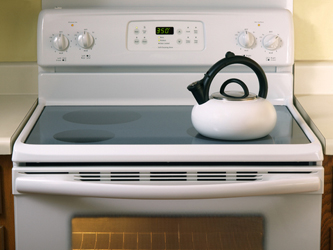
How to clean and take care of your stove.
Continuous-Clean Oven Cleaning
Some soil from cooking operations is usually present. The catalyst is continually working to oxidize soil when the oven is hot enough, thus the “continuous” clean name. The rough porous surface spreads out greasy soil, thus increasing contact with hot air in the oven. Fats and oils are quickly oxidized; milk and cheese take higher temperatures (about 475 F.); sugar spills are hardest to remove so protection from spills like fruit pie boil-overs is important.
If large spills occur, you have to remove the promptly to stop the “glazing” effect which seals the surface and prevents oxidation of soil. Follow this procedure:
1. Blot up excess with paper towel or sponge while oven is still slightly warm and the soil soft. Do not rub towel or sponge across surface; particles may clog the surface.
2. After the oven is completely cool, spray the soil area with all-purpose spray-on/wipe-off cleaner (“Fantastik”, “409”, etc.). Work into porous surface by scrubbing with a nylon-bristle brush or nylon net pad. Let stand 15-30 minutes.
3. Scrub softened soil with the nylon brush or pad.
4. Rinse thoroughly with cold water, by squeezing out clean, wet sponge over area; then blot up (not mop up) excess water with paper towel or sponge. (Do not let water run down into burner assembly, especially in gas ovens.) Repeat rinsing and blotting, if needed, to remove all softened soil and cleaner residue.
5. Turn on oven at 475 F. and leave two hours. If some soil remains, the continuous-cleaning coating should work to oxidize it.
CAUTION: Spray-on/wipe-off cleaners volatize rapidly with heat and may leave a chalky stain, hard to remove. So do not apply to a warm oven, and be sure to rinse away all residue.
Occasionally wipe out whole inside of oven with a nylon pad and plain water; blot dry and then run oven empty for 2 hours at 475 F. This helps the oven catch up with accumulated grease and soil. This may be needed when the oven is used for more broiling and roasting (with more grease spatters) but short time cooking (broiling) or lower temperature (roasting), than for baking. This also helps clean the door, which usually get less heat in cooking.
NEVER use oven cleaners on continuous-clean ovens, as they will clog the pores in the coating, and, may damage the coating, or the aluminum backing if it is used.
NEVER use scouring powders or any other powdered cleaners, as they will clog the coating, and the abrasive action also damages it.
NEVER use any metal pads or abrasives, as they will wear off the coating, and also metal filings may come off and clog the coating.
Manually clean oven racks.
Conventional Oven Cleaning
Fill a small glass bowl with 1/2 cup full strength ammonia, place in oven and close. Let stand overnight, then wipe loosened dirt with paper towels or newspapers. If then necessary, rub surfaces with a suitable abrasive, such as fine steel wool or soap-filled steel wool pad, wiping off “suds” with paper towels. Then wash with warm soapy water and rinse. Repeat the process if necessary.
Commercial oven cleaners are helpful if ovens are very soiled, but they should be used with caution. These cleaners can damage surfaces outside and around the oven. Be sure to protect these areas with layers of newspaper or other materials and cover your hands with protective gloves. If using most commercial oven cleaners, never spray in a hot oven (over 200 F.) which will make it even more caustic and can corrode surfaces. Never spray on oven light, electric elements, or pilot light in older gas ranges. Turn off the pilot light when using spray oven cleaners.
Removable parts, such as broiler pans and racks, can be cleaned more easily if allowed to soak in a sink or pan of sudsy water to which a little ammonia has been added. A lot of soaking is better for the surface, and easier, than a lot of scrubbing. Never soak aluminum in ammonia or other alkalis.
If necessary, you can scour oven racks or porcelain enamel with steel wool or a scouring pad to remove baked-on grease or food spills which have not come off in regular cleaning. Occasional use of such abrasive pads, or scouring powder on badly baked-on soil is OK, but don’t use these too often or scrub too hard for you can scratch the smooth surface and make it harder to clean from then on. Do not scour mirror-finished metals, glass, or baked-on enamel.
Electric and Gas Cooktops–Cleaning
Most electric and gas cooktops are porcelain enamel, which can be easily cleaned when cooled, with a damp cloth (warm water) or paper towel.
If greasy or sticky soil, use warm sudsy water on cloth, paper towel, or sponge; rinse with clean cloth; wipe dry.
If stubborn soil, lay sudsy wet cloth or towel over spot and leave a few minutes to loosen soil (semi-soaking). And/or rub with a nylon net scrubber or soft plastic mesh pad. Do NOT use abrasive pads or scouring powders as these can permanently scratch the porcelain finish.
Control knobs are washed in warm suds with cloth or brush, rinsed, and dried. If they come off, they’re easier to clean, but do not soak them.
The area under drip pans may be washed with warm suds, rinsed, and dried. Use paste of baking soda and water on difficult spots. A soap-filled steel wool pad may be used occasionally if necessary, or use a plastic mesh pad.
Cleaning Burners, Gas or Electric
Electric burners usually burn off food spilled on them. Heavy spills can be wiped off with a damp cloth when the burner is completely cold.
Gas burners and grates may be removed for cleaning. Soak grates in very hot water and detergent about a half-hour if very dirty; then scrub with a brush, rinse and dry. A little ammonia may be added to the soaking solution if they are very greasy. Soak burners in hot, soapy water to soften grease and grime. Clean with a brush. Do not use scouring powder which will clog the holes. The metal ring with holes in it may come off the burner for cleaning. If the holes in the burner are stopped up, clean with a fine wire, hair pin, paper clip or pipe stem cleaner. Don’t use toothpicks as they could break off and clog the holes. Rinse burners in hot water and place them upside down in a warm oven (300 F.) to dry; about 15 minutes.
Cleaning Reflector Bowls
Reflector bowls under burners may be taken out and washed in hot suds. Soak several minutes to loosen heavy dirt; up to 20 minutes may be needed if grease is burned on the bowls. Wipe off trim rings with sudsy cloth. On stubborn spots on chrome bowls and rings, use a paste of baking soda and water with a plastic mesh pad. Rinse and dry. Never put chrome bowls in the dishwasher or in a self-cleaning oven. Porcelain reflector bowls can be washed in either sudsy water or in an automatic dishwasher. If your manual recommends it, porcelain bowls can occasionally be cleaned in a self-cleaning oven cycle, upside down on oven racks. Wiping spills off bowls after cooking prevents stain build-up which requires stronger measures.
Range Cleaning
Wash exterior surfaces after they have cooled with detergent and warm to hot water. A paste of water and baking soda can be used on difficult spots. Rinse and wipe dry. The same materials can be used on chrome trim, or stainless steel parts. Never use scouring powder or harsh abrasive pads. Plastic or nylon pads may be used for difficult spots.
Creamy appliance wax can be used on painted surfaces for protection and ease of cleaning, but is not needed on porcelain enamel surfaces.
Check owners manual to see if other cleaning materials are safe to use.
Range Hood Cleaning
Range hoods and fans remove grease and moisture from cooking, and so collect dirt that needs regular cleaning. Often wash exposed metal with warm suds solution and rinse. If very greasy, use ammonia and water and rinse. Never use abrasive pads or scouring powders as they can scratch the finish. Wash light bulb when cool with suds and rinse and dry to keep the light bright.
Occasionally clean fan blades of dirt and grease, which can restrict air flow, and cause motor over-heating and fire hazard. Wash the hood with warm, soapy water often. Wash the inside and outside. Rinse the hood and wipe it dry. Occasionally take the metal filter out of the hood. Put the filter in warm, soapy water. Let it soak for a few minutes. Wash and rinse it. Dry the filter and put it back in the hood.
Some hoods have charcoal filters. These cannot be cleaned. They should be replaced about once a year. You can buy charcoal filters from the store that sells hoods.
Check manual directions for cleaning your hood and fan. If instead you have electronic air cleaners in place of a ducted system, follow manual instructions for regular cleaning of filters.
Self-Cleaning Oven Cleaning
Follow directions in your manual exactly, as oven models and brands vary.
Pre-clean the areas not reached in the self-cleaning cycle: the frame around the oven opening, and the edge of the door outside the gasket. NEVER clean the gasket with anything!
Use hot water and detergent or a paste of baking soda and hot water on difficult spots; rinse well with vinegar water to remove all residue. This prevents this soil from being baked on during the high heat of the cleaning cycle. Re-clean these areas after the cleaning cycle is used.
If your range manual recommends it, you may leave the oven racks in for the cleaning cycle; however, they will discolor, lose their shine, and become hard to slide in and out. If you do leave them in, afterward rub the edges of the racks and of guides on oven walls with soapy-steel wool pad, wipe off, and then rub few drops of salad oil on edges for easier sliding. It’s probably better to take racks out before cleaning cycle and clean them by hand.
If your range manual recommends it, you may put burner drip bowls in oven for self-cleaning cycle; however, high heat will permanently discolor chrome rings–a bluish hue.
If your manual recommends it, you may put broiler pan in during self-cleaning cycle, but wipe off all excess grease else it may catch fire.
At end of cycle and after oven has cooled down, wipe out small amount of fine ash left inside with a damp cloth.
NEVER use chemical oven cleaners in a self-cleaning oven. Some residue may remain, and be changed by the high heat into compounds that etch the porcelain enamel.
The Author:
Anne Field, Extension Specialist, with credit to MSU Extension



Cleaning Burners of Stoves – I have been doing apartment management for 14 years and have found the easiest and fastest way to get a years worth of boil over food on burners is to spray them (both sides) with oven cleaner and run them in the dishwasher.
That’s a great tip! Using oven cleaner and running the burners in the dishwasher sounds like a simple and efficient way to clean off stubborn food residue. It’s always helpful to find quick and effective cleaning methods, especially when dealing with a year’s worth of build-up. Thanks for sharing your experience with stove cleaning!